
In many Chinese milk-tea shops, an order can sound like a sentence — a small, exact formula of tea, ice, sweetness and toppings.
The first thing to notice is the ordering. A customer might say 少冰、三分糖、加珍珠、不要芋泥 — less ice, thirty-percent sugar, pearls, no taro. To a newcomer it sounds like a password. To regulars, it is an everyday choice.
At a busy shop, the queue may form after lunch or on an evening out. The drink becomes part of a day's rhythm, and an easy invitation to a friend.
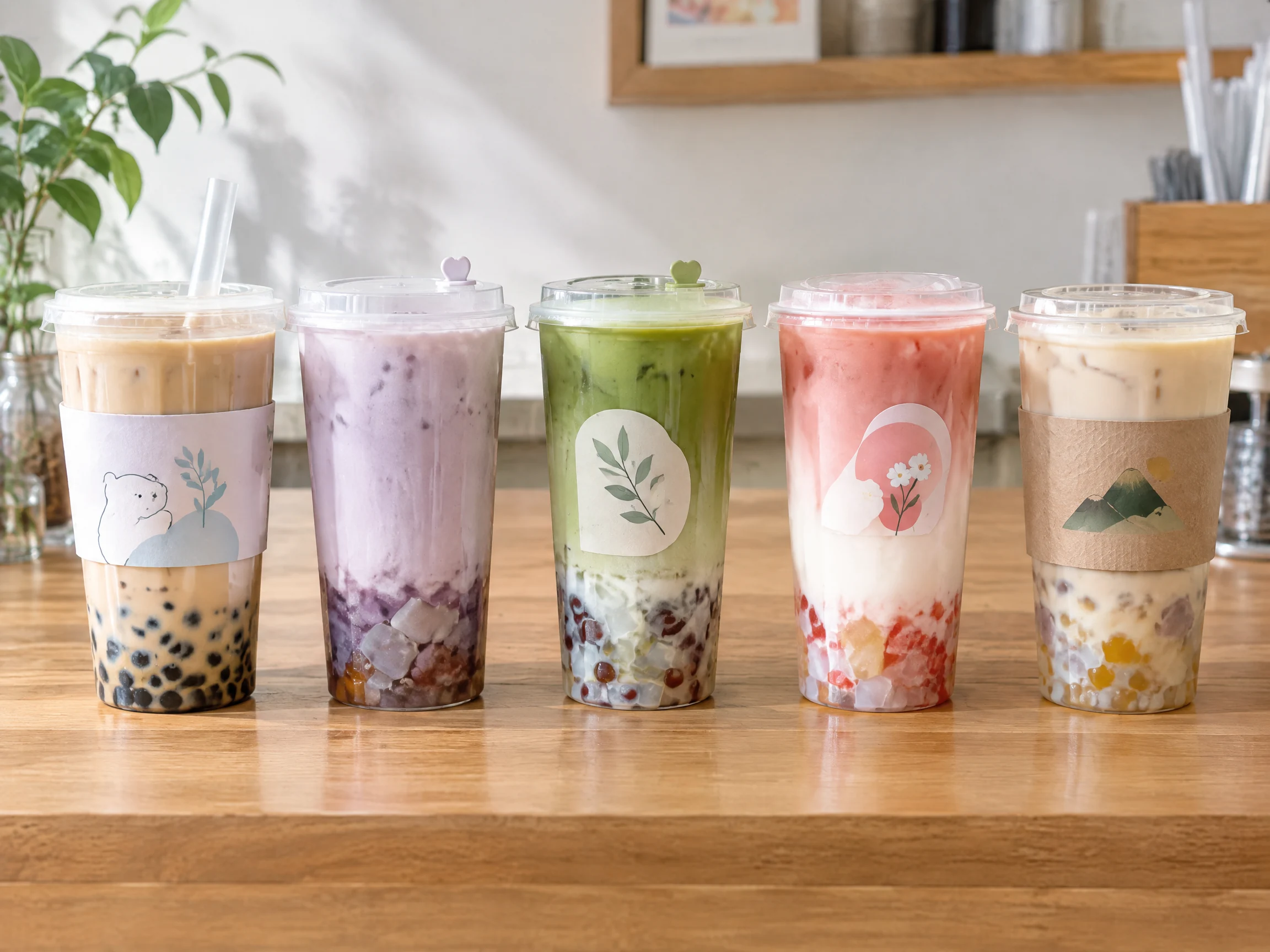
The order is a sentence, and everyone knows theirs by heart.
Why is every milk tea order a personal formula?
The menu is a small design brief: ice or no ice; how sweet, in percentages; which tea base; fresh milk or a creamier blend; and the part that really matters — the toppings. 珍珠, the tapioca pearls; 波霸, the fat ones; 芋泥 taro paste; 烧仙草 grass jelly; and a cloud of 奶盖, the salted-cream cap on top. Regulars don't read the board. They recite a formula, and their phones keep it saved the way other people keep a password. It is a drink built to be specified — not "tea," but yours.
Why are there so many milk tea brands in China?
This is the part that baffles visitors: the sheer number of them. 蜜雪冰城, the cheap one on almost every corner, with a theme song you will hear from a passing scooter; 喜茶 and 奈雪的茶, which first made milk tea feel like a treat; 霸王茶姬, wrapped in a Chinese-classical mood; 茶百道, 古茗, 沪上阿姨, 书亦烧仙草 — plus local favourites you can only get at home. In Changsha, people queue for 茶颜悦色 and carry cups to other cities as souvenirs, because it doesn't exist where they are going.
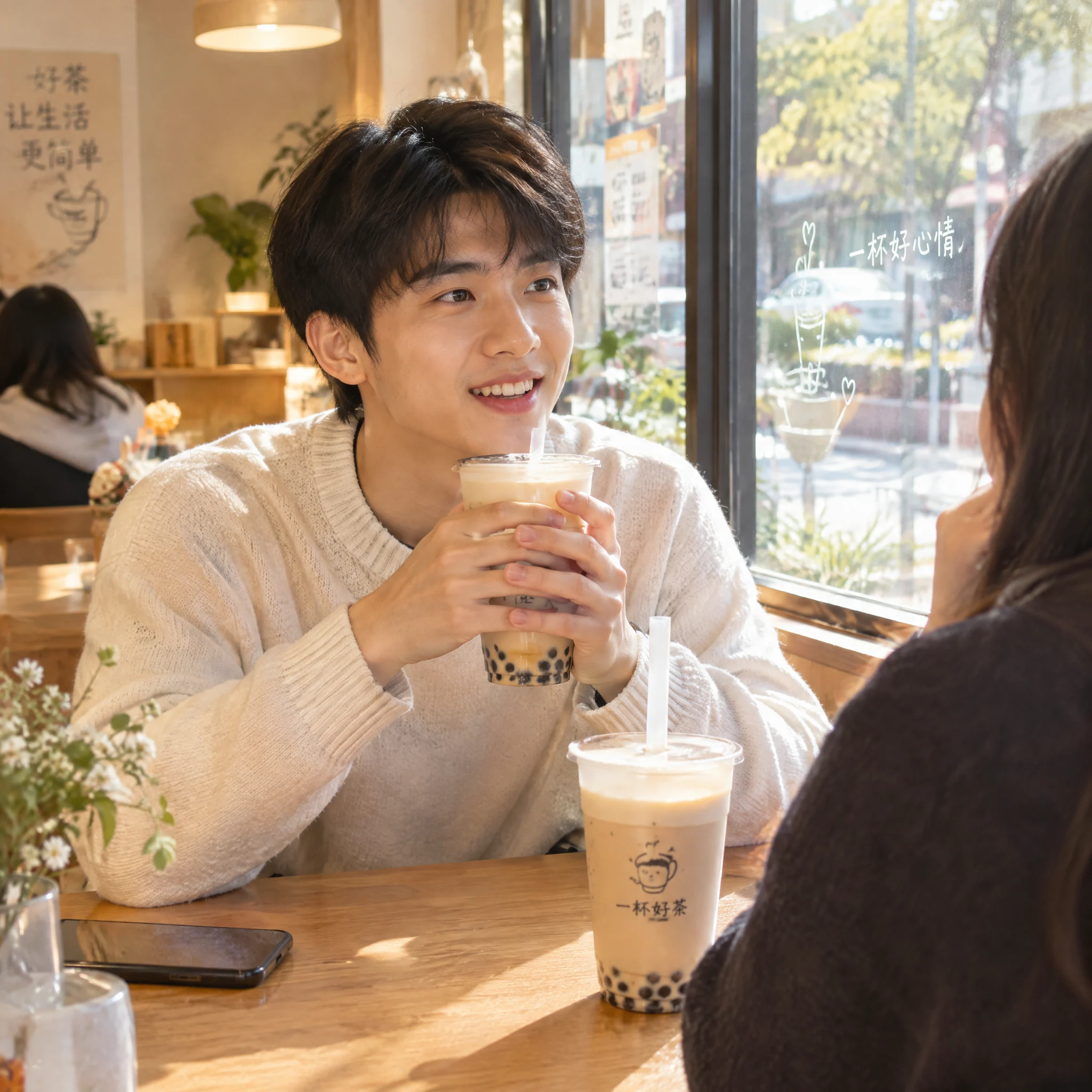
Same drink, a hundred names, and a new one every season.
No sooner is a flavour popular than the shop next door launches its own version — then a limited edition, then a seasonal one, then a collaboration with a cartoon or an artist, until the cup itself is the reason to take a photo. A category that barely existed a generation ago now counts more than four hundred thousand shops across the country. The innovation is relentless because the customers are young, quick to move on, and always ready for the next thing.
Why is buying someone a milk tea a way of saying you miss them?
Milk tea's real job in China is social. It is what a colleague buys for the whole team on a hard afternoon; what a group chat decides on together, one order after another; what you bring back for someone when you step out. Every autumn, when the first cool day arrives, 秋天的第一杯奶茶 — "the first milk tea of autumn" — floods every feed, and people buy the drink for someone they love as a way of saying, without saying it, that they thought of them.
“It costs almost nothing, which is exactly why it can be given away so often.”
The young people's cup
On a hard day the milk tea is the treat you allow yourself; on a good day, the celebration. Students carry a cup into the library; friends use it as the reasonable excuse to sit somewhere for an hour; the cup has become a small accessory — something to hold, to photograph, to set beside a laptop. The one thing the trend is quietly correcting is the sugar: half the orders now come with "thirty-percent sweet," "no extra sugar," or fresh milk in place of the old creamy powder. Even the indulgence has grown a version of restraint.
Something to hold, and a reason to sit down together.
A drink is easy to copy. What these shops actually sell is harder: a small, cheap, repeatable reason to leave the house, to text a friend, to hand someone something warm, to make an ordinary afternoon feel chosen. The order is called. Somebody collects their cup. The next person steps up, ready to recite their own small, exact sentence about who they are.
Key facts
- Sugar and caffeine vary widely with the tea base, cup size, sweetness setting and toppings; check a specific product rather than treating one number as typical.
- Freshly made tea drinks have become a visible part of contemporary Chinese city life.
- Many menus let customers choose sweetness, ice level and toppings.
- A drink can be an everyday treat, a small gift or a reason to sit together.
FAQ
What does 少冰、三分糖、加珍珠、不要芋泥 mean?
Less ice, 30% sugar, pearls, no taro — the exact sentence a regular recites instead of ordering "a milk tea."
What does 三分糖(sān fēn táng)mean?
“Thirty-percent sugar” — one of the sweetness levels (无糖 / 三分糖 / 半糖 / 七分糖 / 全糖) you choose at the counter.
Is Chinese milk tea healthy?
It depends on the recipe and serving size. Tea-based drinks can contain added sugar and caffeine, so a specific menu's nutrition information is more useful than a single claim about every cup.
Why is milk tea so popular in China?
Because it does two jobs at once: a cheap, repeatable treat for yourself, and an easy way to tell someone else "I was thinking of you."
What is 秋天的第一杯奶茶?
"The first milk tea of autumn" — the drink people buy for someone they love when the first cool day of the season arrives.
Words to know
- 奶茶 nǎi chá — milk tea
- 少冰 / 去冰 shǎo bīng / qù bīng — less ice / no ice
- 三分糖 / 半糖 sān fēn táng / bàn táng — thirty-percent sugar / half sugar
- 珍珠 / 波霸 zhēn zhū / bō bà — tapioca pearls / the larger pearls
- 芋泥 yù ní — taro paste
- 奶盖 nǎi gài — the salted-cream "cheese" cap
- 鲜奶 xiān nǎi — fresh milk — as opposed to powdered creamer
- 秋天的第一杯奶茶 qiū tiān de dì yī bēi nǎi chá — "the first milk tea of autumn"
- 隐藏菜单 yǐn cáng cài dān — “hidden menu”: off-board custom combinations
Sources and further reading
- China Supply and Marketing Cooperation, overview of the contemporary freshly made tea-drink market: https://www.chinacoop.gov.cn/news.html?aid=1851442
- Fujian provincial consumer guidance, reporting on lower-sugar preferences and the need to check ingredients: https://www.fjjn.gov.cn/ztzl/xyxxztzl/202407/t20240708_2041239.htm

