
The music begins after dinner, when a paved square changes from a route into a room.
Groups known as *guangchang wu* gather in parks, plazas and spaces between apartment buildings. Dancing offers exercise, friendship and a reason to leave the apartment without a membership fee or private room.
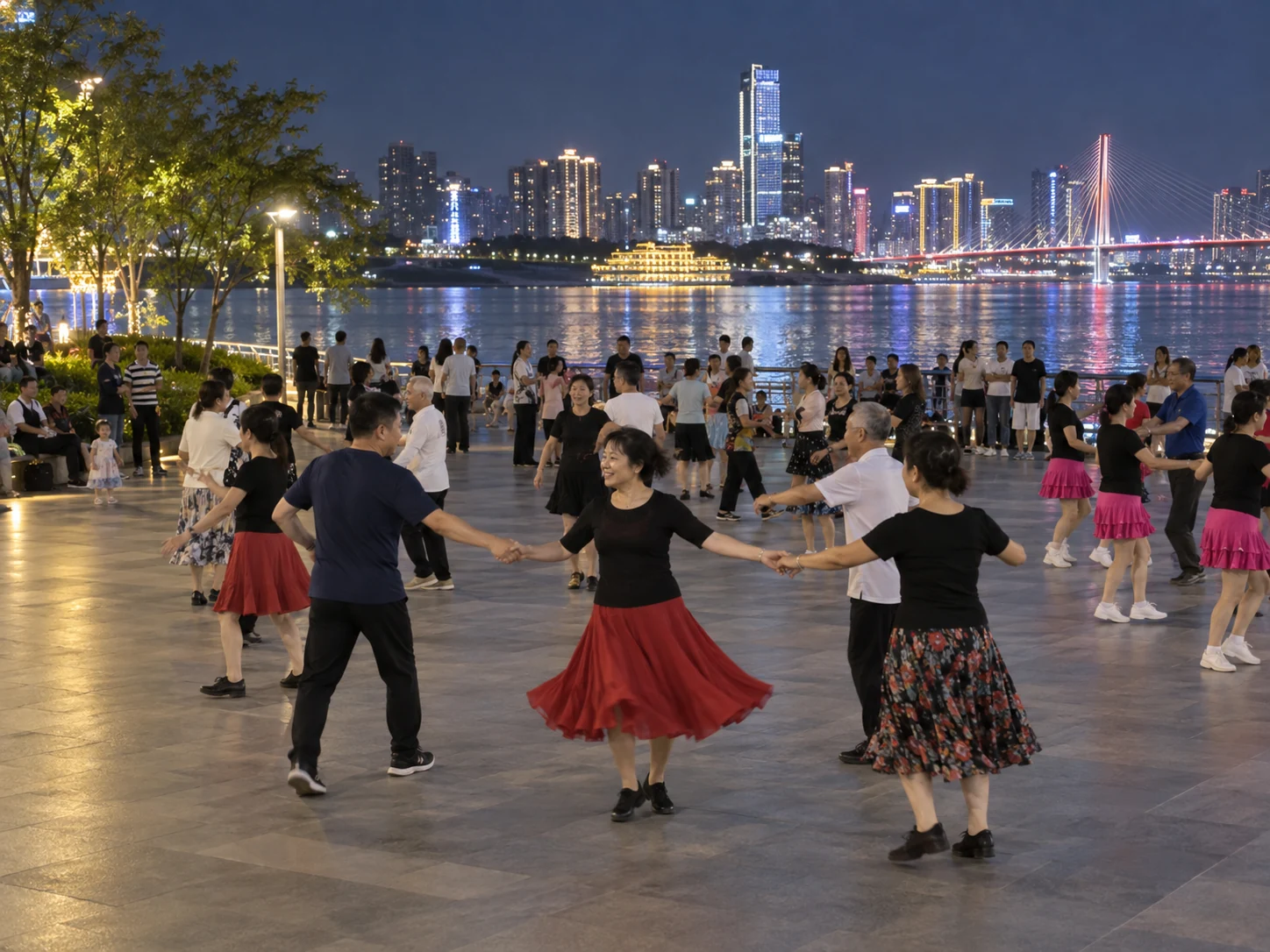
There is no single "square dance" to learn. One group may favour familiar steps and songs; another tries a brisker routine or mixes in elements of folk dance, jazz or street dance. The square is an open place to practise, meet neighbours and simply enjoy moving together.
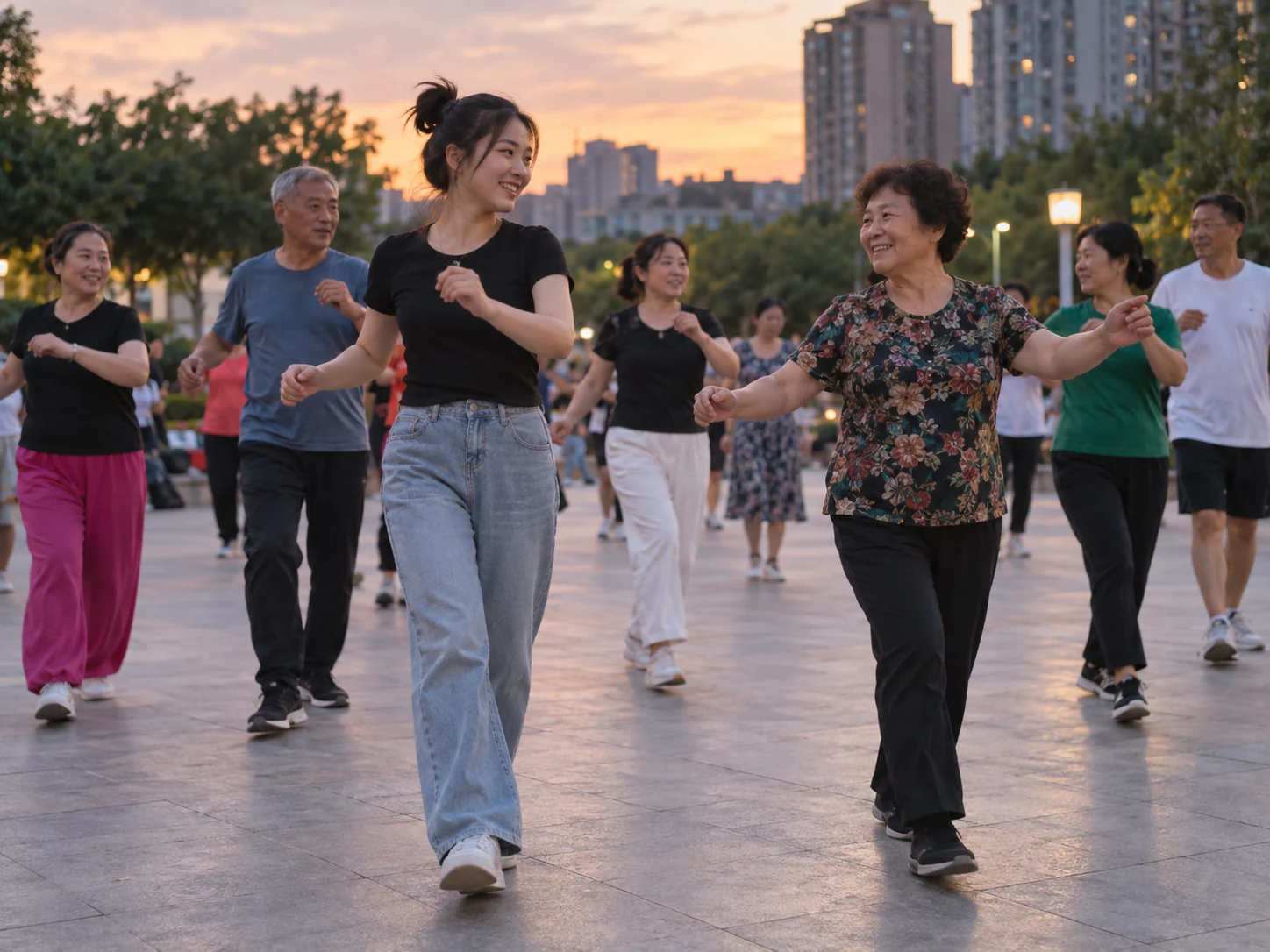
Nor is it only for retired women. They remain an important part of many groups, but younger dancers are joining too, bringing different music and choreography. What changes from one evening to the next is part of the pleasure: people can watch, learn a few steps, or find a group that feels like theirs.
Sharing public space sometimes calls for agreement about music volume and time. That practical detail matters, but it is not the whole story. The more interesting sight is a public place becoming lively through ordinary people choosing to dance.
A Clear Answer
People of different ages dance in China's public squares for movement, music and company. The routines keep changing, and the ease of joining is much of their appeal.
Sources and further reading
- Beijing Municipal Bureau of Sports, 2026 square-dance competition with a new youth category: https://tyj.beijing.gov.cn/bjsports/gzdt84/zwdt/744095560/index.html
- Chongqing Municipal Commission of Culture and Tourism, report on younger participants and varied dance styles: https://whlyw.cq.gov.cn/zwxx_221/bmdt/zqwljb/202401/P020240125534391612811.pdf
- Participant interviews and a local scene are still required before final publication.

