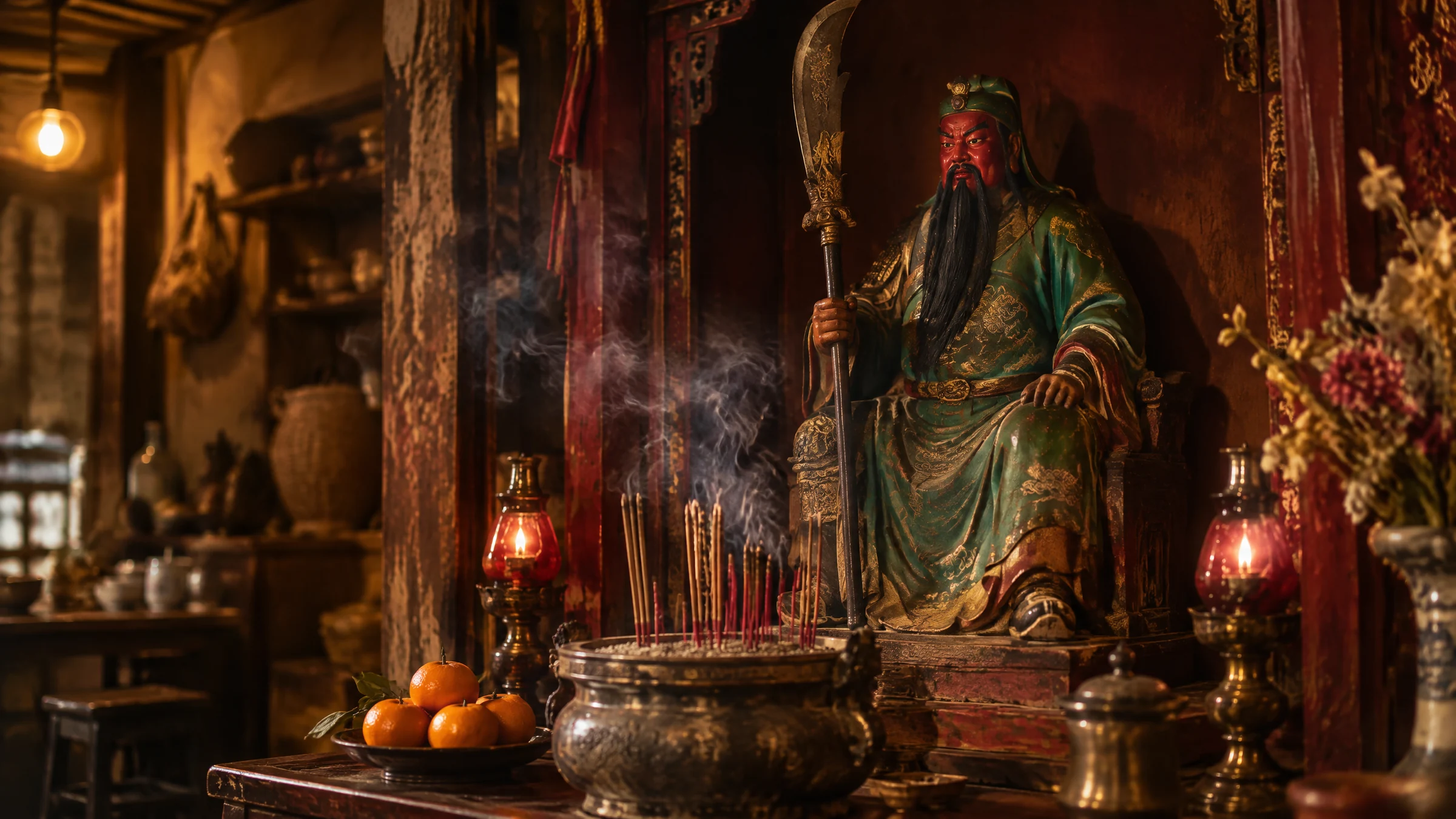
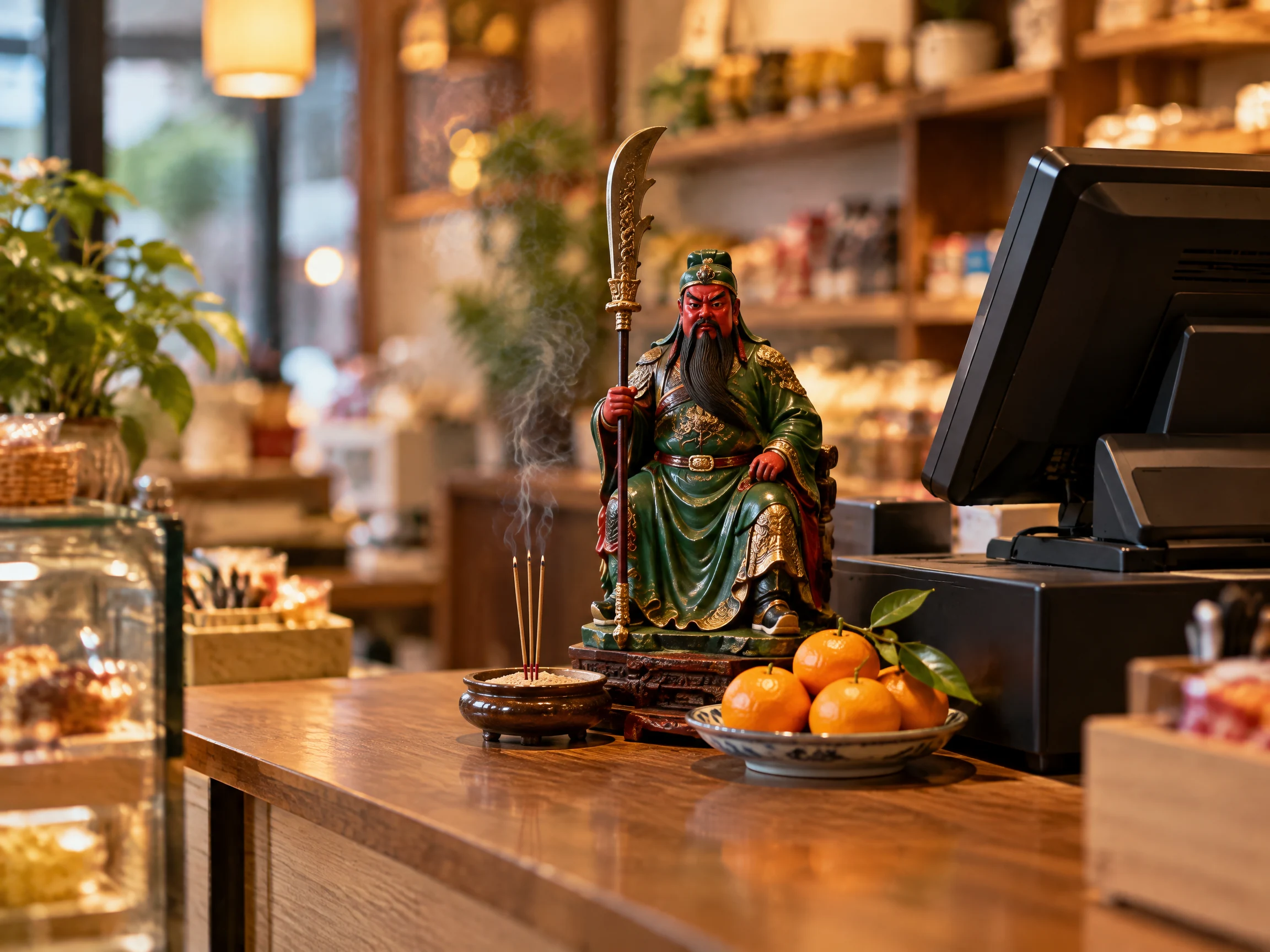
In a noodle shop in Chengdu, or the back room of a Hong Kong pawnshop, there is often a small red-faced man on a shelf above the till: long black beard, green robe, one hand resting on an upright blade, a fresh curl of incense in front of him. He is not decoration. Many owners greet him before they unlock the door.
That man is 关羽, Guan Yu — a real general, who served the warlord Liu Bei at the end of the Han dynasty and was captured and executed by an enemy in A. D. 220. For most of the past thousand years, though, China has known him by other names: 关公, Lord Guan; 关帝, Emperor Guan. He is a god of loyalty, of war, and — unlikely as it sounds — of money.
Who was Guan Yu, really?
Strip away the legends and what remains is a brave, proud soldier. He came from Hedong, in today‘s Shanxi, and joined Liu Bei early, alongside another fighter, Zhang Fei; the official history 三国志 says the two were so close they shared a bed, “as dear as brothers.” In A. D. 200, briefly serving a rival warlord, Cao Cao, he charged into an enemy army and killed its general, Yan Liang. He was gifted, and he knew it. In 219 he lost the region of Jingzhou to his enemies, was caught, and was executed. His own dynasty gave him a modest posthumous title, 壮缪侯。 A fine general — not yet a god.
So how did a general become a god?
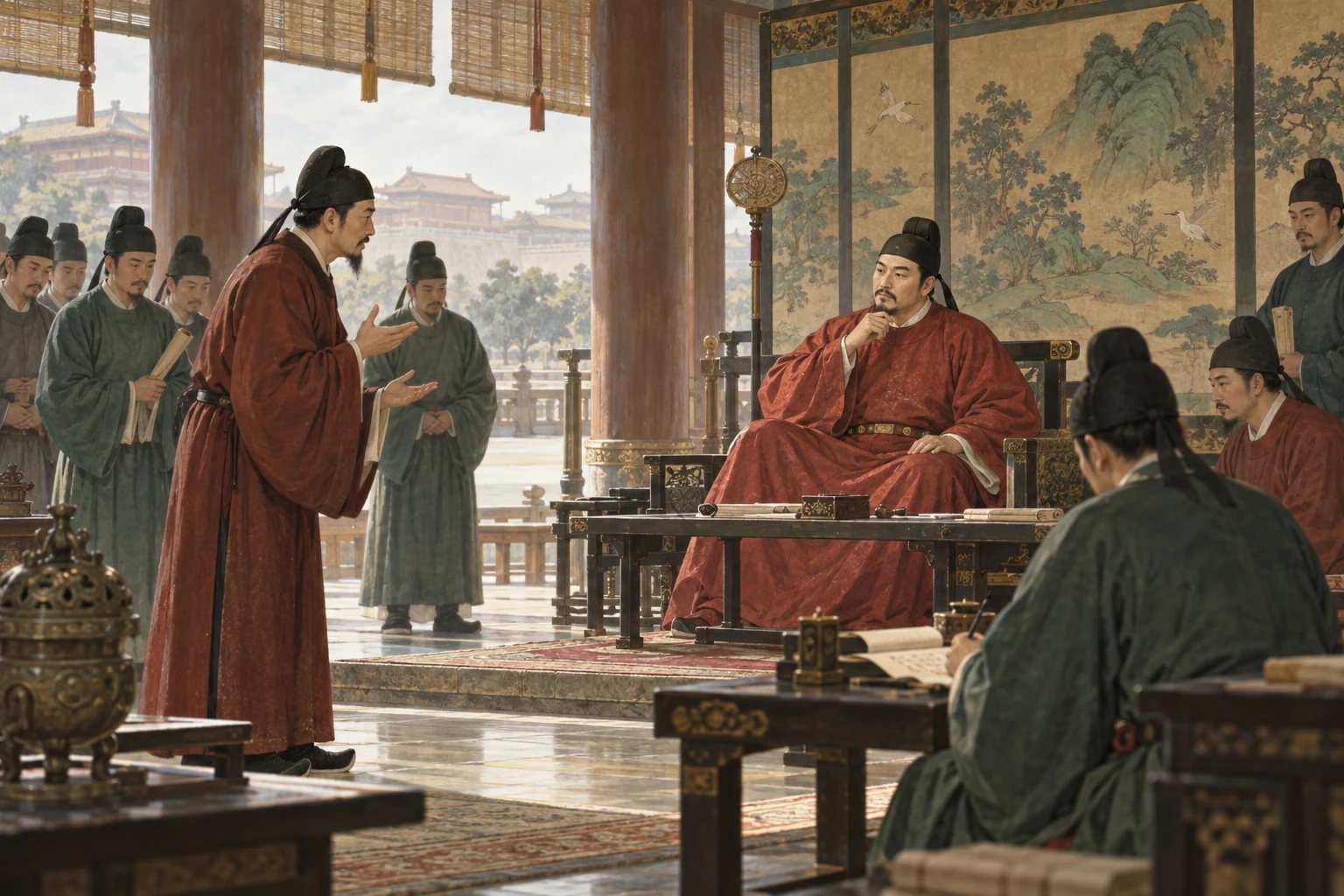
The promotion took a thousand years, and it came from the top. In 1102 the Song emperor Huizong, a devoted Daoist, gave Guan Yu the rank of duke, then made him an immortal of the Daoist pantheon. Later Song, Yuan and Ming rulers kept raising him — prince, king, and, in 1590, “emperor.” In 1614 the Ming emperor Wanli named him 关圣帝君, a great god who “subdues demons in the three worlds.” The Qing went further: by the dynasty‘s end his official title ran to twenty-six characters, and his standing at court may have eclipsed even Confucius. Emperors had their reasons. A god of 忠, loyalty to one’s lord, is a very useful thing to have on a throne‘s side.
Why is he standing above the cash register?
Because loyalty turned out to be good for business. As merchants spread across China in the Ming and Qing, they adopted Guan Yu as 武财神, the “martial god of wealth” — not for lucky numbers, but for 义, the ethic of keeping your word. A shop that honoured him was saying: deals made here are kept. The same logic places his statue in police stations, where he stands for justice and courage, and — more awkwardly — in the shrines of criminal brotherhoods, where he stands for loyalty among men. 黑白两道, the “black and white ways,” the underworld and the police, pray to the same god.
Was any of it true?
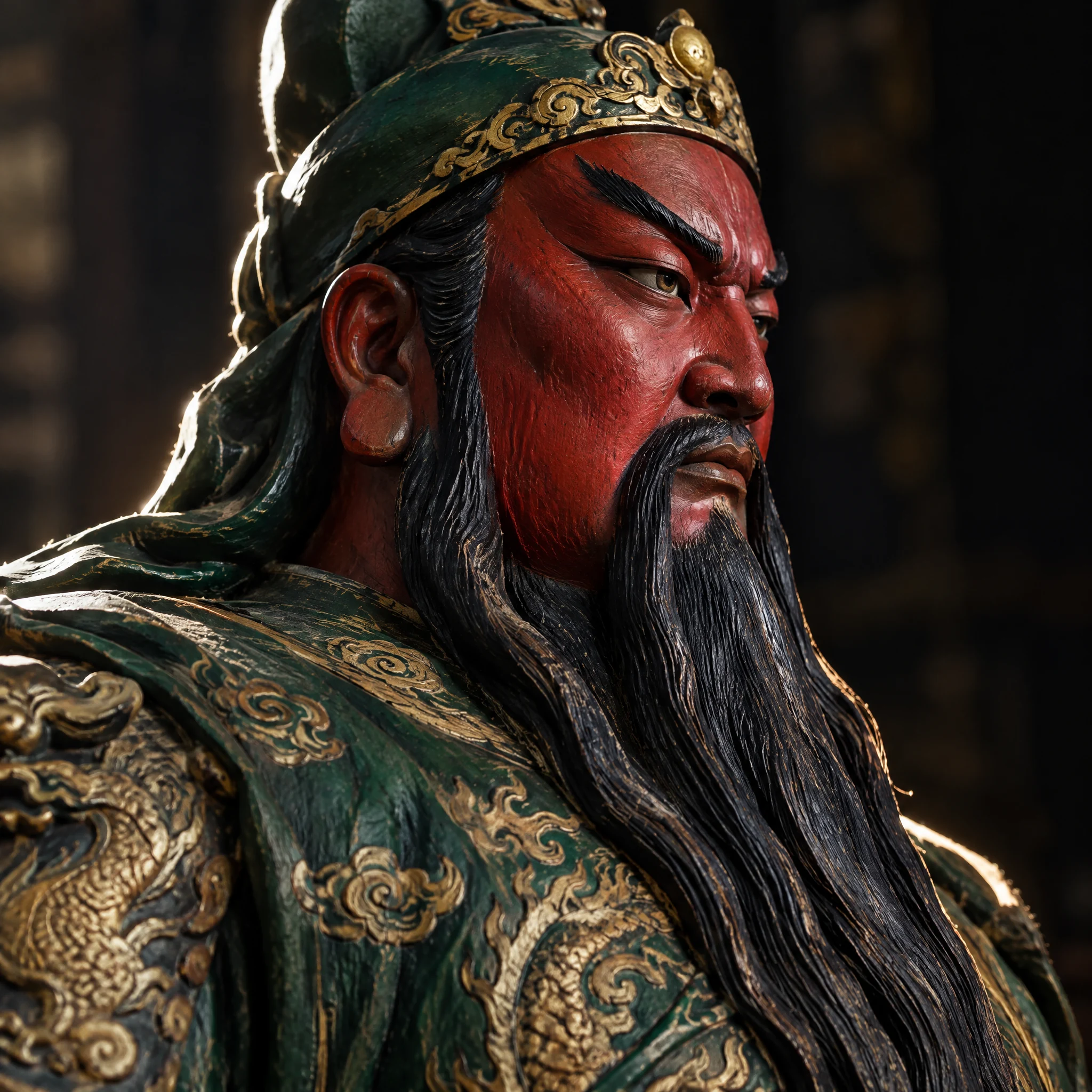
Most of the Guan Yu people picture comes from a novel, not history. In the fourteenth century, Luo Guanzhong‘s 三国演义, Romance of the Three Kingdoms, turned a good general into a flawless hero: three friends swearing brotherhood in a peach garden, 桃园结义; a great curved blade, the 青龙偃月刀; a famous red horse, the 赤兔马。 Historians can find no trace of the oath, the blade or the horse.
History gave us the loyalty. The novel gave us the legend. The emperors gave us the god.
Where can you meet him?
Yuncheng in Shanxi, his home region, holds his oldest and greatest temple, 解州关帝庙。 You will also find him in temples from Hong Kong to Taipei, where worshippers shake out his oracle slips, 关帝灵签, for answers to the day‘s questions; on shop shelves and restaurant counters; and, these days, in films and games that retell the Three Kingdoms. Look above a till, and you are seeing a general who lost one last battle and then won almost everything else.
Key facts
- Who he was: 关羽 Guan Yu, a general under Liu Bei in the Three Kingdoms era, born in Hedong — today‘s Yuncheng, Shanxi — and executed in A. D. 220.
- His record: brave and proud; he killed the enemy general Yan Liang in A. D. 200, but lost Jingzhou and was captured in 219, dying with only a modest posthumous title.
- How he became a god: the Song emperor Huizong made him a Daoist immortal from 1102; the Ming emperor Wanli named him 关圣帝君, “Holy Emperor Guan,” in 1614; Qing titles ran to twenty-six characters.
- What he governs: loyalty and war — the 武圣, or “Martial Saint,” a match for Confucius — and, for merchants, wealth, as 武财神, the martial god of wealth.
- His look, and its source: red face, long beard, the 青龙偃月刀 blade, the 赤兔马 horse — almost all of it from the fourteenth-century novel, not history.
FAQ
Was Guan Yu a real person?
Yes. He was a general under Liu Bei, recorded in the 三国志, and executed by his enemies in A. D. 220. The novel‘s hero is real at the core, embellished outward.
Why do businesses keep his statue beside the till?
Not for lucky numbers, but for 义, the ethic of keeping one‘s word. His presence is a promise that deals made here are honoured.
Why do both police and gangsters pray to him?
Because he is the god of loyalty and brotherhood — values both sides claim. It is a paradox Chinese culture has never seemed to mind.
When is his festival day?
His temple day falls in the fifth lunar month, commonly the thirteenth. At his temples, worshippers can also draw his oracle slips, 关帝灵签, for answers to everyday questions.
Words to know
- 关羽 Guān Yǔ — Guan Yu, the general
- 关公 Guān Gōng — “Lord Guan,” the familiar name
- 关帝 Guān Dì — “Emperor Guan,” the divine title
- 忠 zhōng — loyalty
- 义 yì — righteousness; keeping faith
- 武财神 wǔ cái shén — the “martial god of wealth”
- 关帝庙 Guān Dì miào — a temple to Guan Yu
- 桃园结义 Táo Yuán Jié Yì — the Peach Garden Oath
- 青龙偃月刀 Qīng Lóng Yǎn Yuè Dāo — the Green Dragon Crescent Blade
Sources and further reading
- Wikipedia, "Guan Yu": [https://en.wikipedia.org/wiki/Guan_Yu](https://en.wikipedia.org/wiki/Guan_Yu)
- Sixth Tone, "How Guan Yu Became China's God of War, Wealth, and Everything Else": [https://www.sixthtone.com/news/1006043](https://www.sixthtone.com/news/1006043)
- Baidu Baike, "Guan Gong Culture": [https://baike.baidu.com/en/item/Guan%20Gong%20Culture/1529161](https://baike.baidu.com/en/item/Guan%20Gong%20Culture/1529161)