Why does a ruler from the seventh century still appear in conversations about good government? Tang Taizong is remembered for helping turn a new dynasty into a durable empire, but the part of his reputation that travels most easily is more human: he knew that power could make it hard to hear unwelcome advice.
He was born Li Shimin and became the second emperor of the Tang dynasty, ruling from 626 to 649. His reign, known as Zhenguan, became a reference point for later writers looking for examples of capable government. That reputation was made by achievements, by court records and by the people who retold them. It should be read as a historical legacy, not a claim that every decision he made was wise.
A ruler who had fought for power
Li Shimin did not arrive at the throne through a peaceful succession. He had played a major part in the Tang family's rise after the collapse of the Sui dynasty. In 626 a violent struggle with his brothers ended at Xuanwu Gate; soon afterward he became emperor. That beginning matters. The celebrated image of a ruler open to criticism cannot erase the force used to secure his position.
The question facing the new court was what kind of rule would follow. Military success could take a throne, but it could not by itself settle taxes, appointments, local administration or the relationship between the emperor and the people expected to tell him the truth.
What Wei Zheng could say
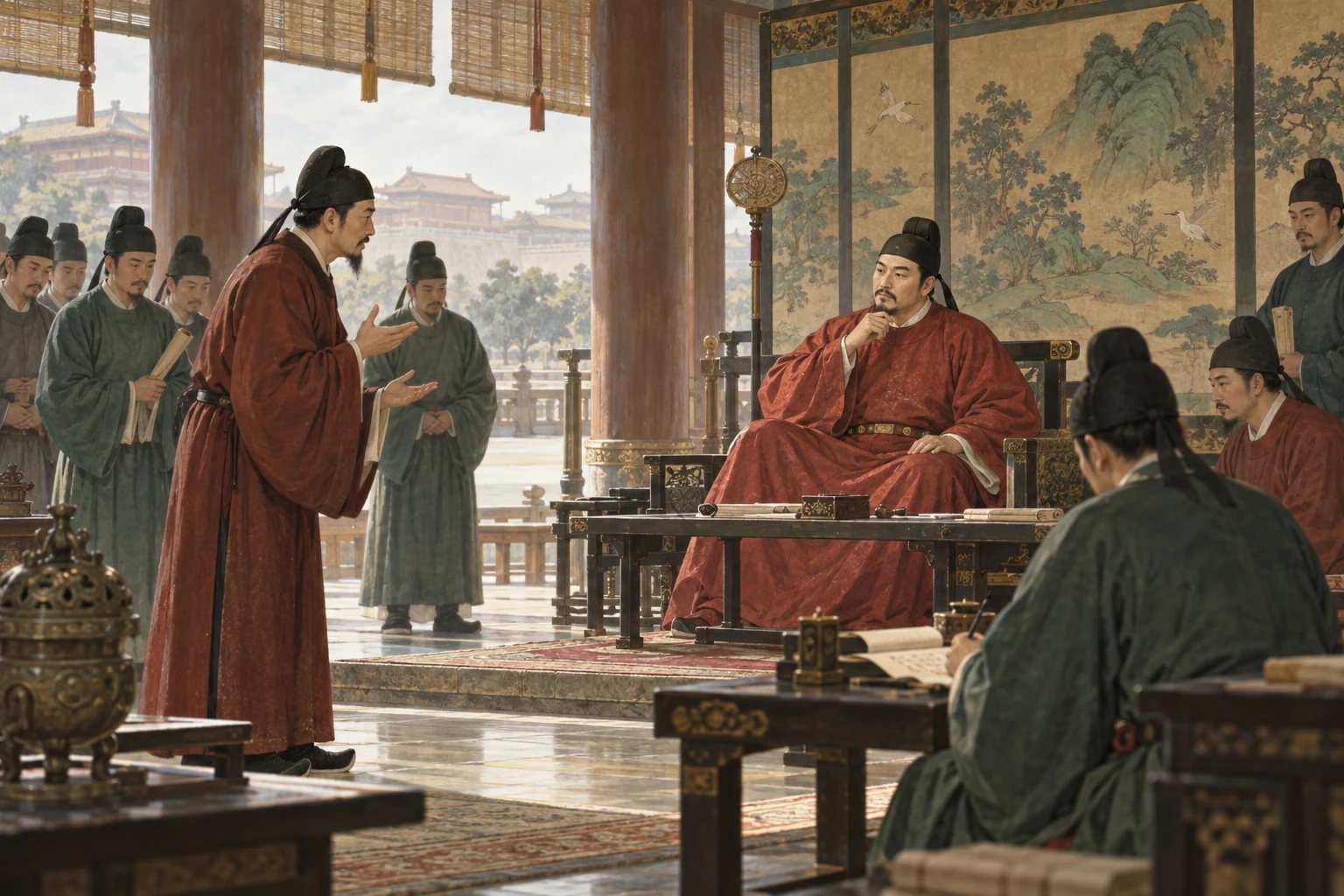
Wei Zheng, one of Taizong's best-known ministers, is remembered for remonstrance: telling a ruler directly when he believed a decision was wrong. Later accounts of their exchanges are part of the reason Taizong became a model emperor. A court in which a minister could object offered a powerful story about restraint at the center of power.
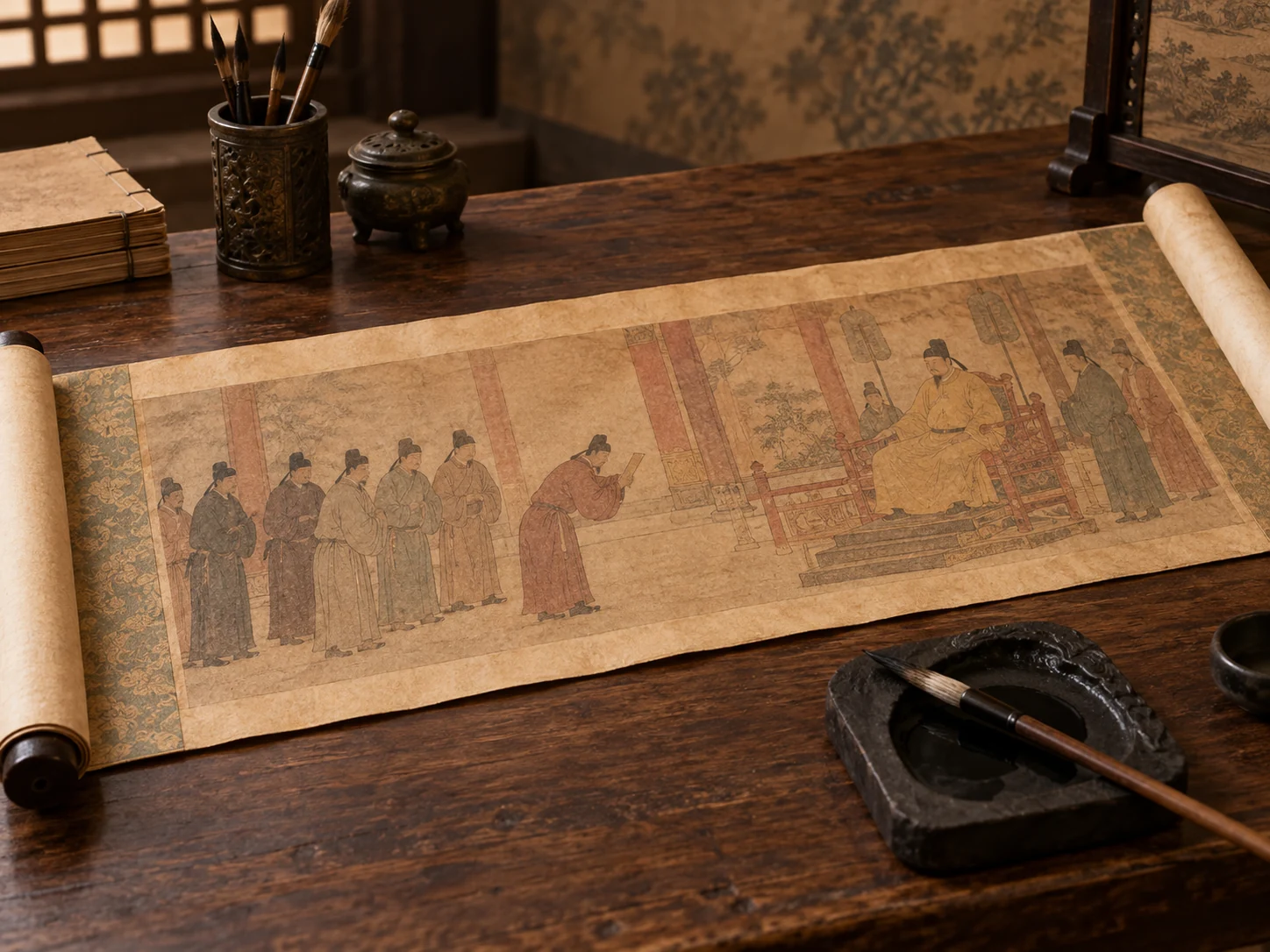
The point is not that Taizong enjoyed being contradicted. It is that the stories repeatedly show how difficult, and how necessary, listening could be. Some accounts also suggest his patience had limits. That makes the relationship more interesting than a simple moral tale about a perfect emperor and a fearless adviser.
The mirror after a minister's death
After Wei Zheng died in 643, later histories preserve Taizong's comparison of a candid adviser to a mirror: without that person, a ruler loses a way to see his own mistakes. The wording and setting come to us through written records and later interpretation, but the image has endured because it makes an abstract political problem tangible. A mirror is useful precisely when it does not flatter.
This is the heart of Taizong's modern appeal. People remember the ruler not only for issuing orders but for the possibility that someone near him could say, "You are wrong." Whether any court consistently lived up to that ideal is another question.
What the prosperous age leaves out
The Zhenguan years were later praised for effective administration and relative stability. They also belonged to an empire with military ambitions, a hierarchy of power and many lives beyond the court. Calling the reign a golden age can obscure the work of officials, farmers, soldiers and neighboring peoples who were not characters in the familiar conversations between emperor and minister.
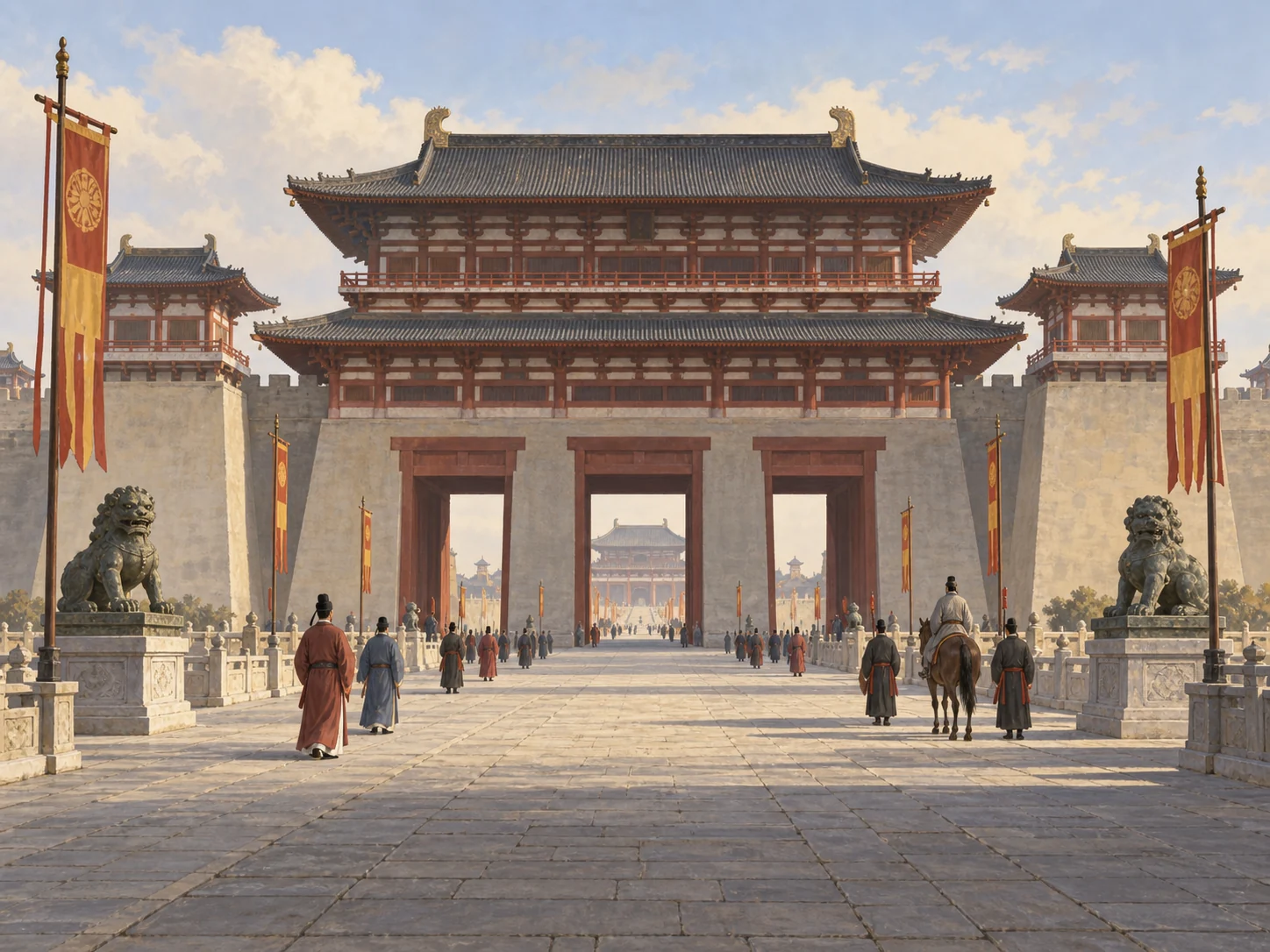
That wider view does not make Taizong insignificant. It makes his achievement and his contradictions easier to see together. The story worth carrying forward is not "great men always listen." It is that even a strong ruler needed institutions and people who could put a different account of reality in front of him.
A clear answer
Tang Taizong is remembered as one of China's great emperors because his reign became a model of strong early Tang government, and because his exchanges with ministers such as Wei Zheng made frank advice part of his lasting image. The historical record is more complicated than the idealized story, which is exactly why the story remains worth reading.
Sources and further reading
- The Metropolitan Museum of Art, "Remonstrating with the Emperor," on the long visual tradition of the adviser who speaks frankly: https://www.metmuseum.org/art/collection/search/39552
- Academia Sinica, scholarly study of Tang diplomacy and the limits of Taizong's receptiveness to criticism: https://www11.ihp.sinica.edu.tw/storage/w2_file/1392NbSddQb.pdf
- National Palace Museum, on the mirror as a historical and moral metaphor in Chinese court culture: https://www.npm.gov.tw/Exhibition-Content.aspx?l=2&sno=04006182