Hunan food is famous for heat, but the first taste of chili is only the beginning of the story.
The province’s cooking is shaped by humidity, preserved ingredients, smoke, fermentation and the appetite for flavors that arrive in layers.
Beyond a single kind of heat
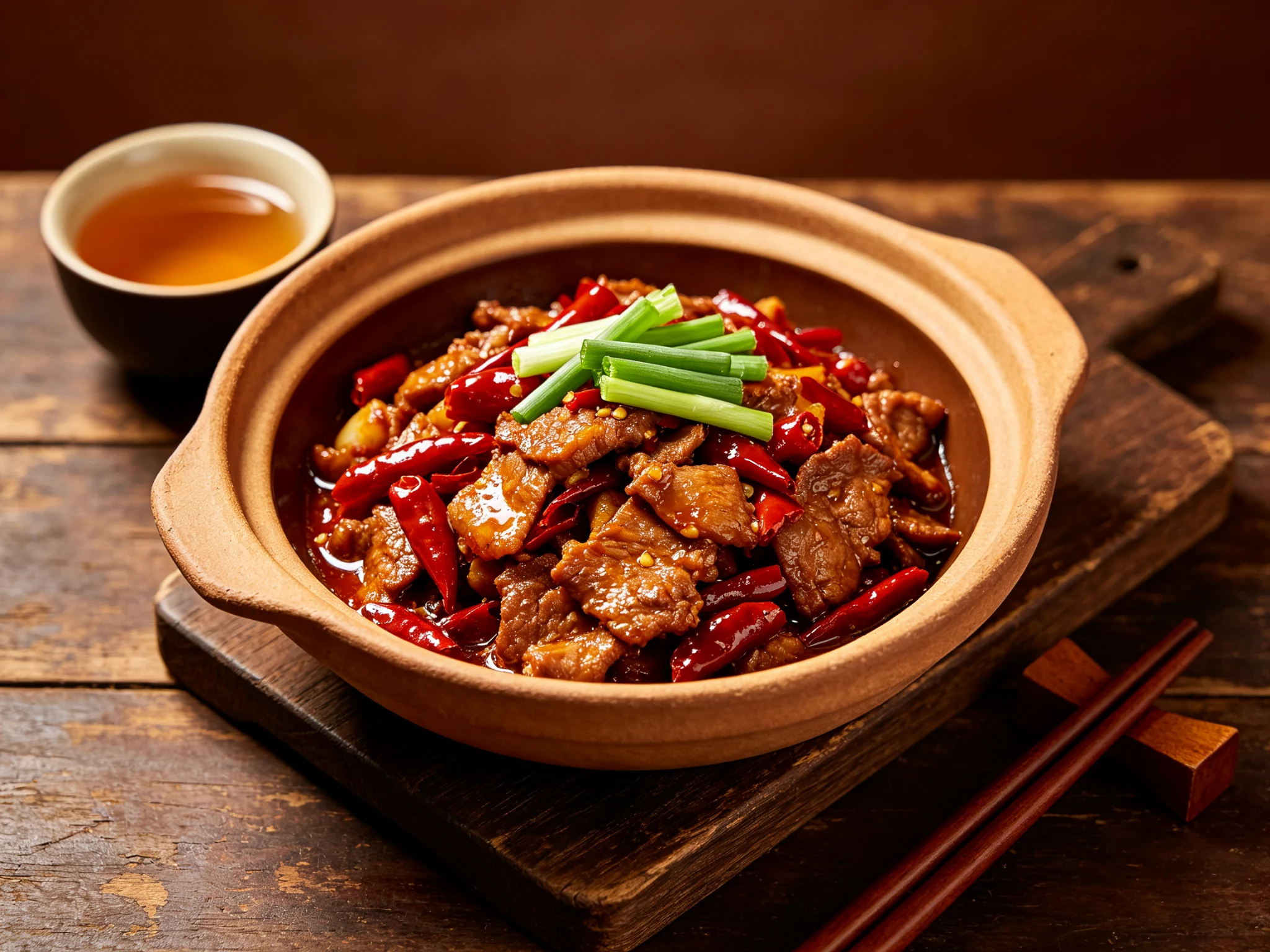
Fresh chilies, dried chilies, chopped chilies and fermented chilies each behave differently. Fresh green peppers bring a bright, grassy sting; dried red peppers deepen a broth; fermented chopped chili adds salt, sourness and time. The cook is not choosing a number on a heat scale. They are choosing how the flavor arrives.
Weather at the table
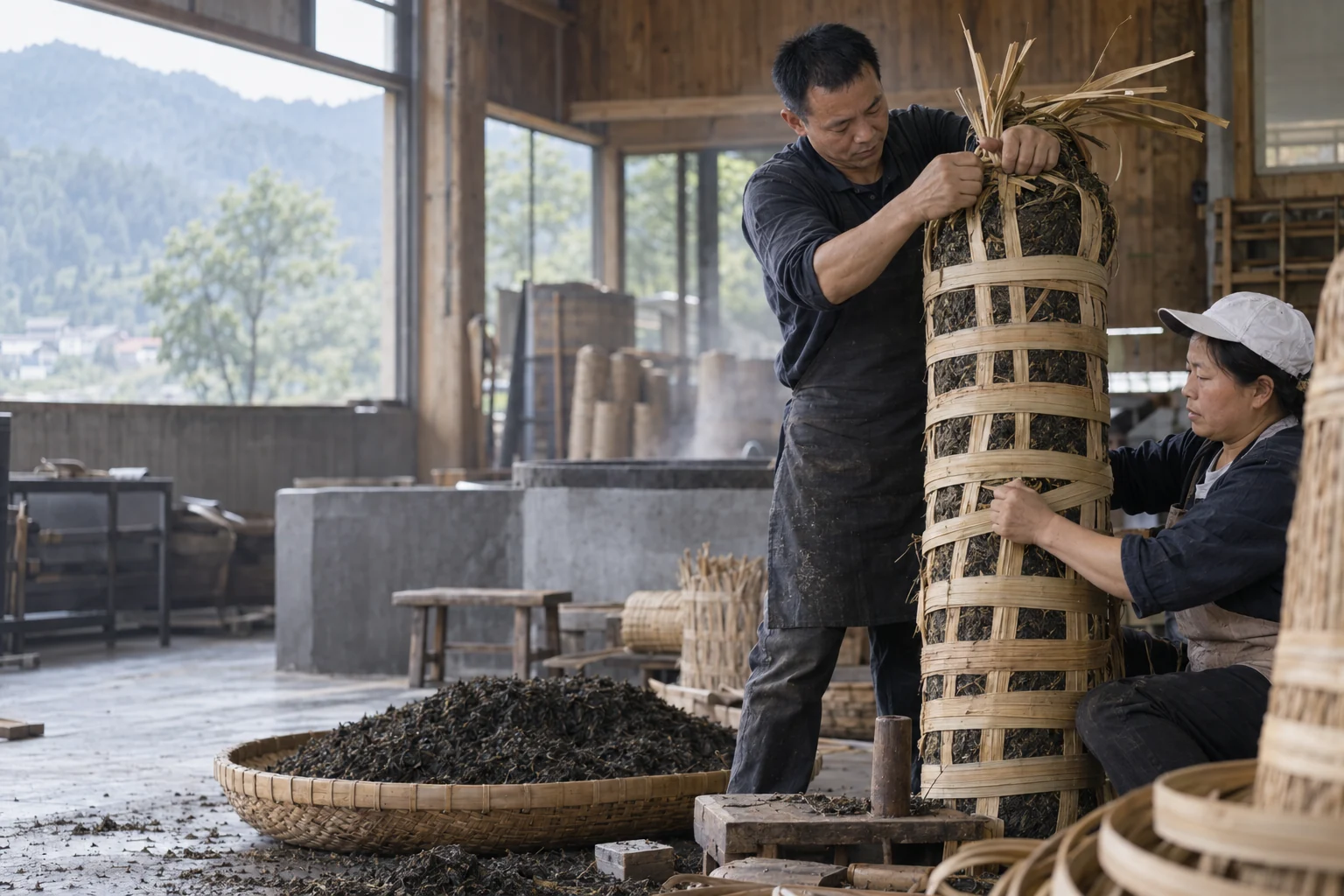
Hunan sits in a warm, humid landscape of rivers, rice fields and long summers. Strong flavors make sense in that climate, but the cuisine is also a record of thrift and preservation. Smoke, salt, vinegar and fermentation helped households carry vegetables, beans and fish through seasons when fresh produce was scarce.
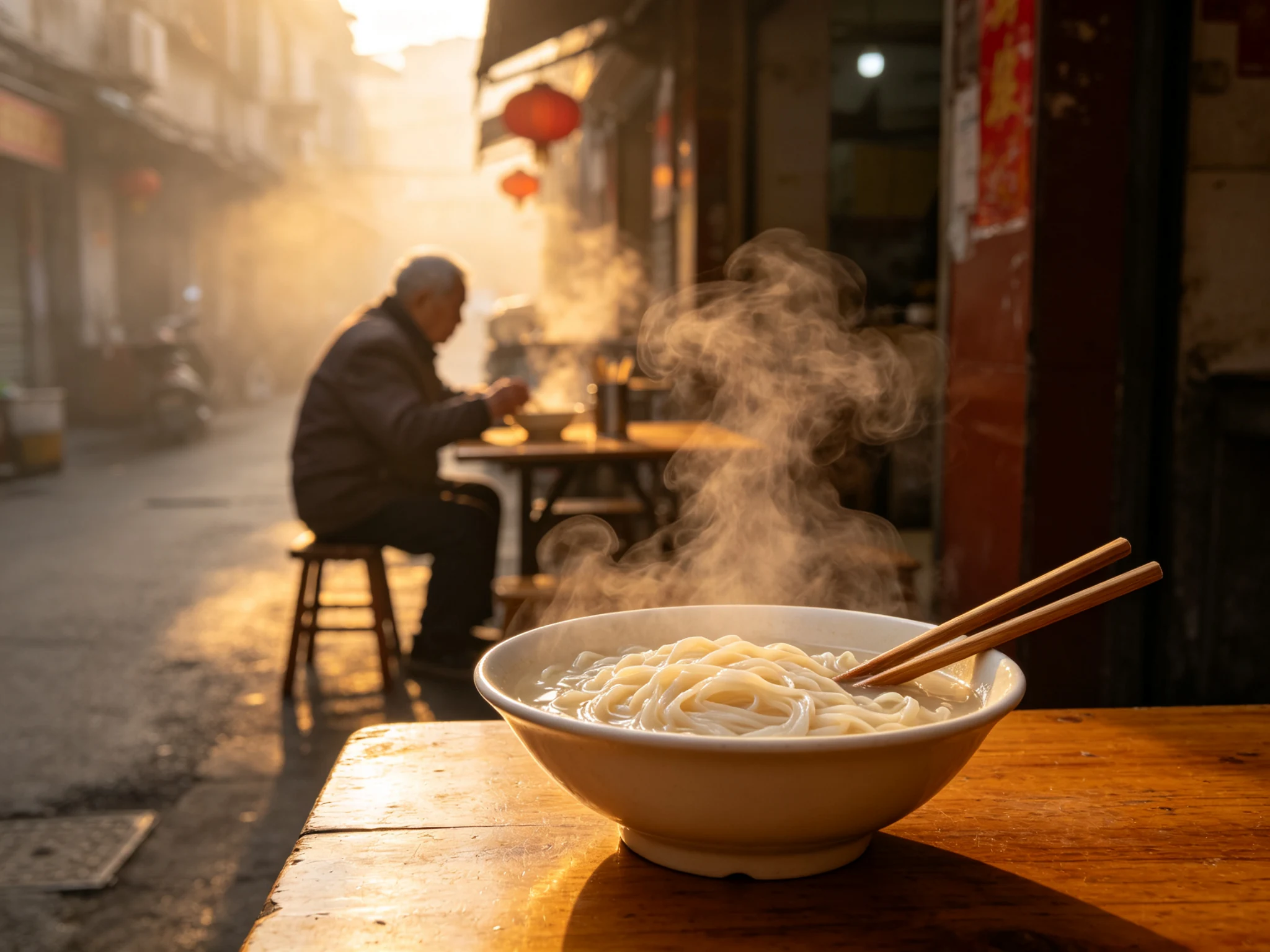
That is why a bowl of noodles can taste layered rather than merely hot. A spoonful of chopped chili may meet pork, pickled beans, garlic, scallion and broth in quick succession. Heat opens the palate; the other flavors give it somewhere to go.
The family recipe is the real map
Ask three Hunan families how they make the same dish and the answers will diverge. One kitchen may use a homemade fermented chili paste, another more vinegar, another a smoky dried pepper. Local ingredients matter, but so do habits learned beside a wok: when to add the chili, how long to fry it, and when to turn off the heat.
For visitors, the useful question is not “How spicy is it?” It is “What kind of flavor is this heat carrying?” That question leads from a sensation to a place, a season and a person.
Hunan food is bold because it is precise. Chili is its most visible language, not its whole vocabulary.
The complete editorial story can be expanded here later.