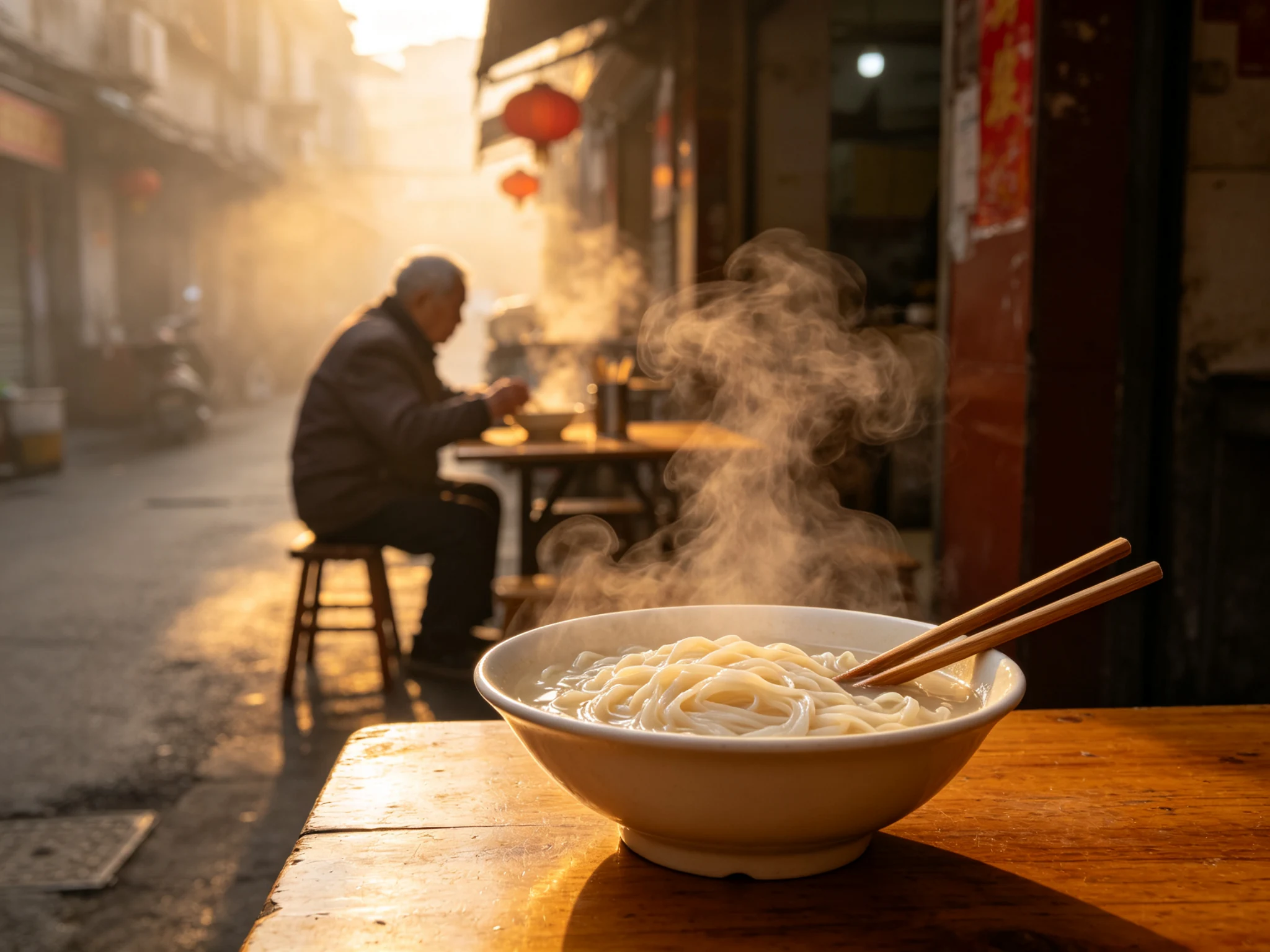
In Changsha, the day can begin with a bowl that does not ask you to slow down. Rice noodles arrive hot; the person eating them has somewhere to be. Yet breakfast offers a few minutes in which a city becomes legible through ordinary decisions: which noodles, which topping, how much chili, and whether there is time to finish the broth.
This is not a dish that needs a festival or a formal introduction. Rice noodles are part of everyday eating in Hunan, and a morning bowl is a familiar way into Changsha. The details matter because there is no single bowl that speaks for every shop or every eater.
The bowl begins with a choice
The noodles may be flat or round. Around Hunan, that distinction can carry local loyalties: flat rice noodles are especially associated with Changsha, while round noodles are closely associated with Changde. The contrast is useful, but it is not a rule that every shop or customer must follow. What matters to the eater is the feel of the noodles in the mouth and the way they hold the broth.
Then comes the mazi—the prepared topping spooned over the noodles. It might be shredded pork, minced meat or another cooked mixture. Preserved vegetables and scallions can add sharpness and freshness. A bowl is assembled quickly, but the topping and broth have been prepared before that moment. Speed at the counter rests on work that began earlier.
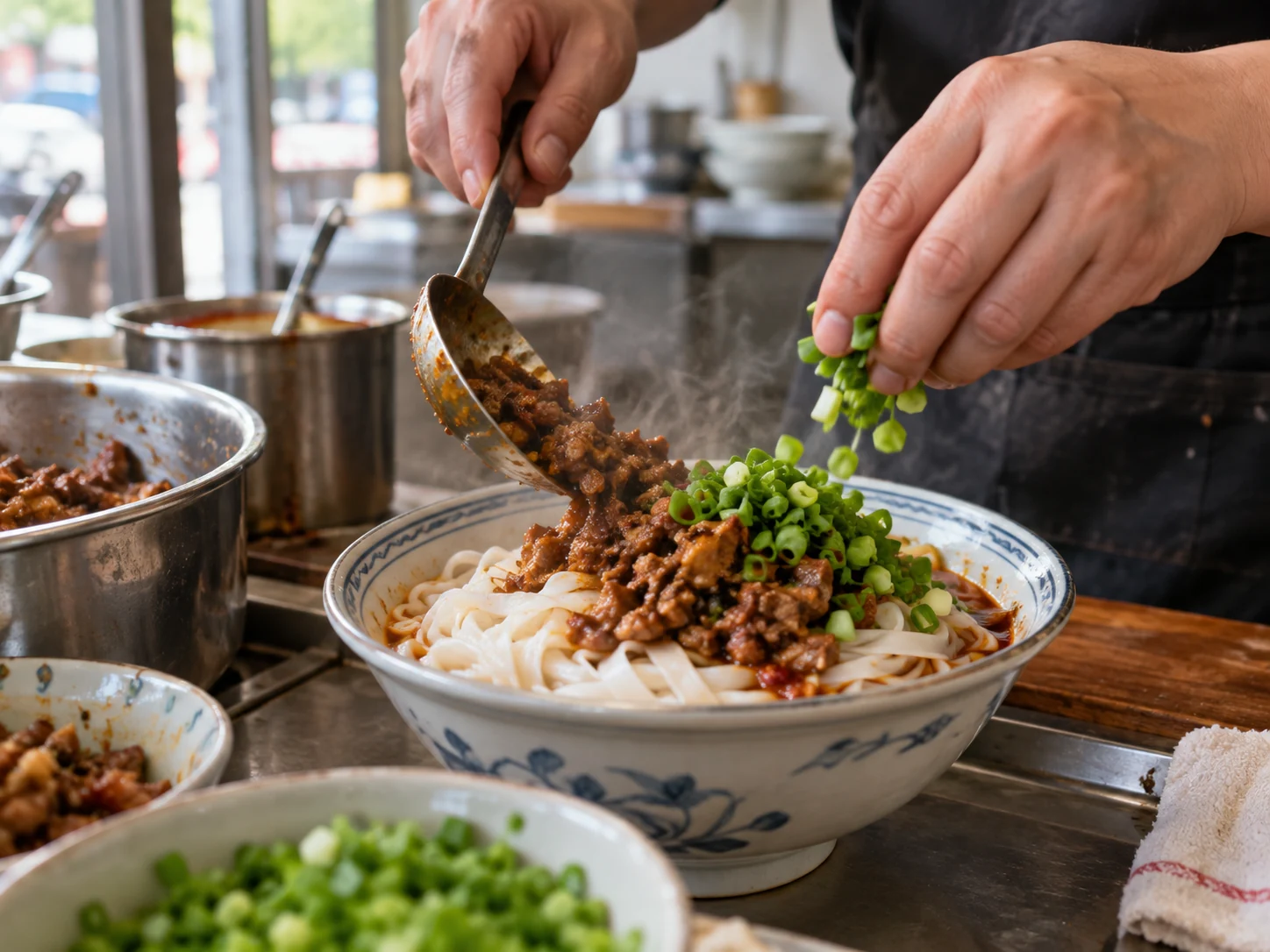
Some accounts of Changsha noodle shops describe owners starting before dawn to make soup, prepare oil and cook the toppings. That does not mean every shop follows the same clock. It does mean the breakfast rush has an unseen first shift. By the time a customer sits down, much of the day's labor is already in the pot.
Chili is a decision, not a definition
Hunan food is often introduced to outsiders as simply spicy. A noodle counter shows why that description is too small. Chili oil or chopped chili may be added, but the customer can also notice the broth, the texture of the noodles, the savoriness of the topping and the brightness of pickled vegetables.
Heat changes the bowl; it does not explain the whole bowl. One person may want a little chili, another much more. Someone tasting Changsha noodles for the first time can begin with the broth before adding anything. That is a better way to understand the dish than treating the highest possible level of spice as a test of authenticity.
The same principle applies across Hunan. Rice noodles from different cities vary in shape, seasoning and toppings. A Changsha breakfast is therefore both local and part of a wider provincial conversation about how a bowl should taste.
A city at breakfast height
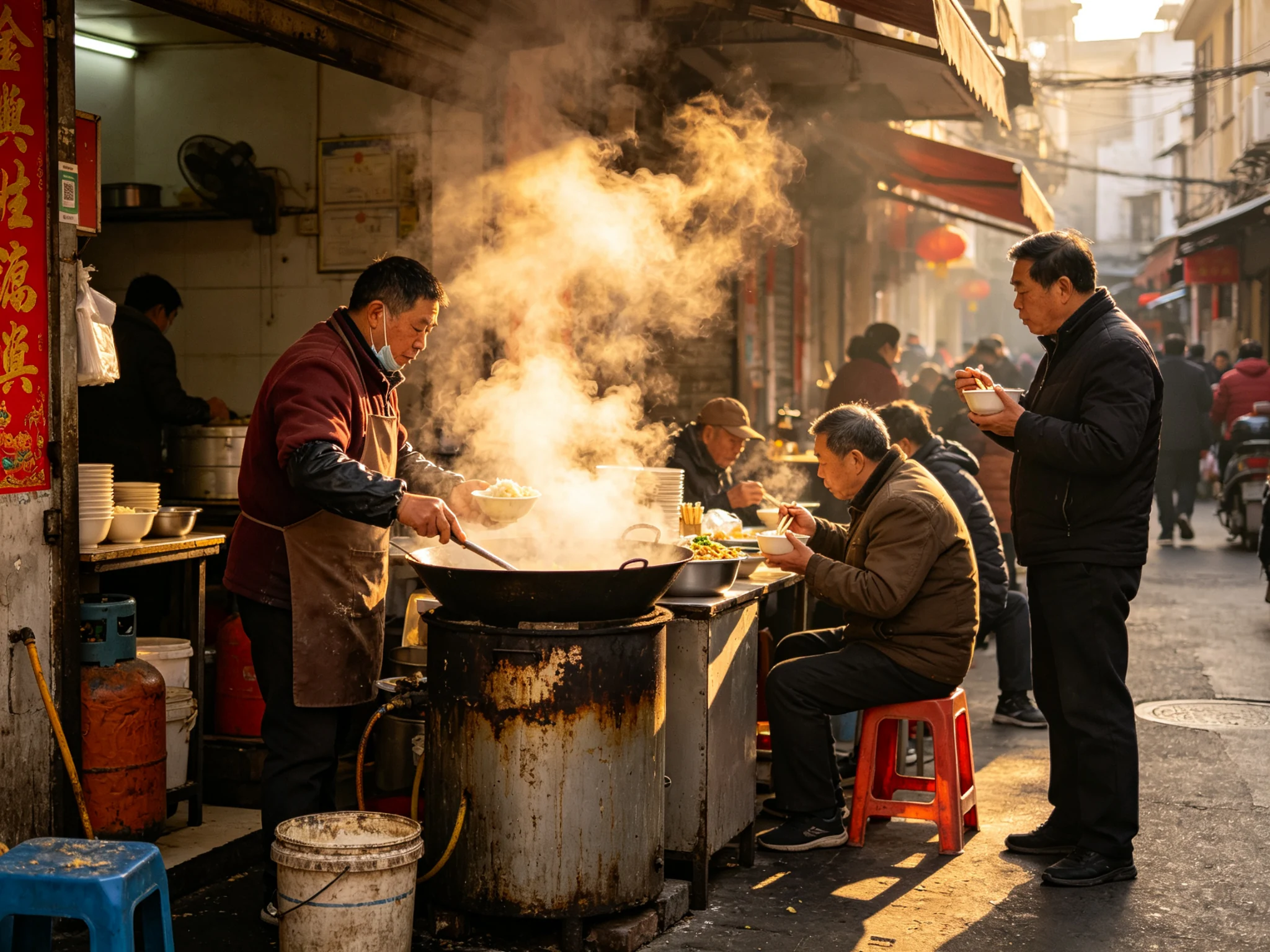
Food writing often photographs a bowl from above and stops there. But the bowl is more interesting when we look at the people around it: the worker who prepared the toppings, the regular who already knows what to order, the visitor trying to understand the choices, the person eating quickly before the next part of the day begins.
None of these people needs to stand for all of China. They simply share a brief public space. A noodle shop makes room for different schedules at the same table. Breakfast may last only a few minutes, yet it repeats often enough to become one of the ways a city recognizes itself.
That is why the story is not really about discovering a secret local dish. Rice noodles are not hidden from the people who eat them. The discovery belongs to the outsider who has learned to look beyond a food photograph: a bowl arrives, but behind it are preparation, preference, neighborhood habit and work.
A clear answer
Changsha rice noodles are an everyday Hunan meal, especially familiar at breakfast. Flat noodles, hot broth, a cooked mazi topping and optional chili are common features, though no single combination defines every shop. The bowl tells a larger story because it joins the early labor of the cook to the routines and choices of the people who eat there.
Sources and further reading
- Hunan Provincial Government, “More than Spicy!” (2021), on Hunan rice-noodle varieties and the Changsha morning habit: https://www.hunan.gov.cn/topic/ccjhl/djz/202107/t20210713_19909838.html
- Hunan Provincial Government international site, “Changsha Rice Noodles” (2025 page), on broth, chili oil and common garnishes: https://www.enghunan.gov.cn/hneng/Tourism/TourHunan/Changsha_55545/Dining/202504/t20250408_33634873.html
- Linxiang Municipal Government, “湖南味道|长沙经济复苏下的店家摊主们” (2023), a reported account of one Changsha noodle-shop owner's preparation and breakfast service: https://www.linxiang.gov.cn/24726/24732/content_2052210.html