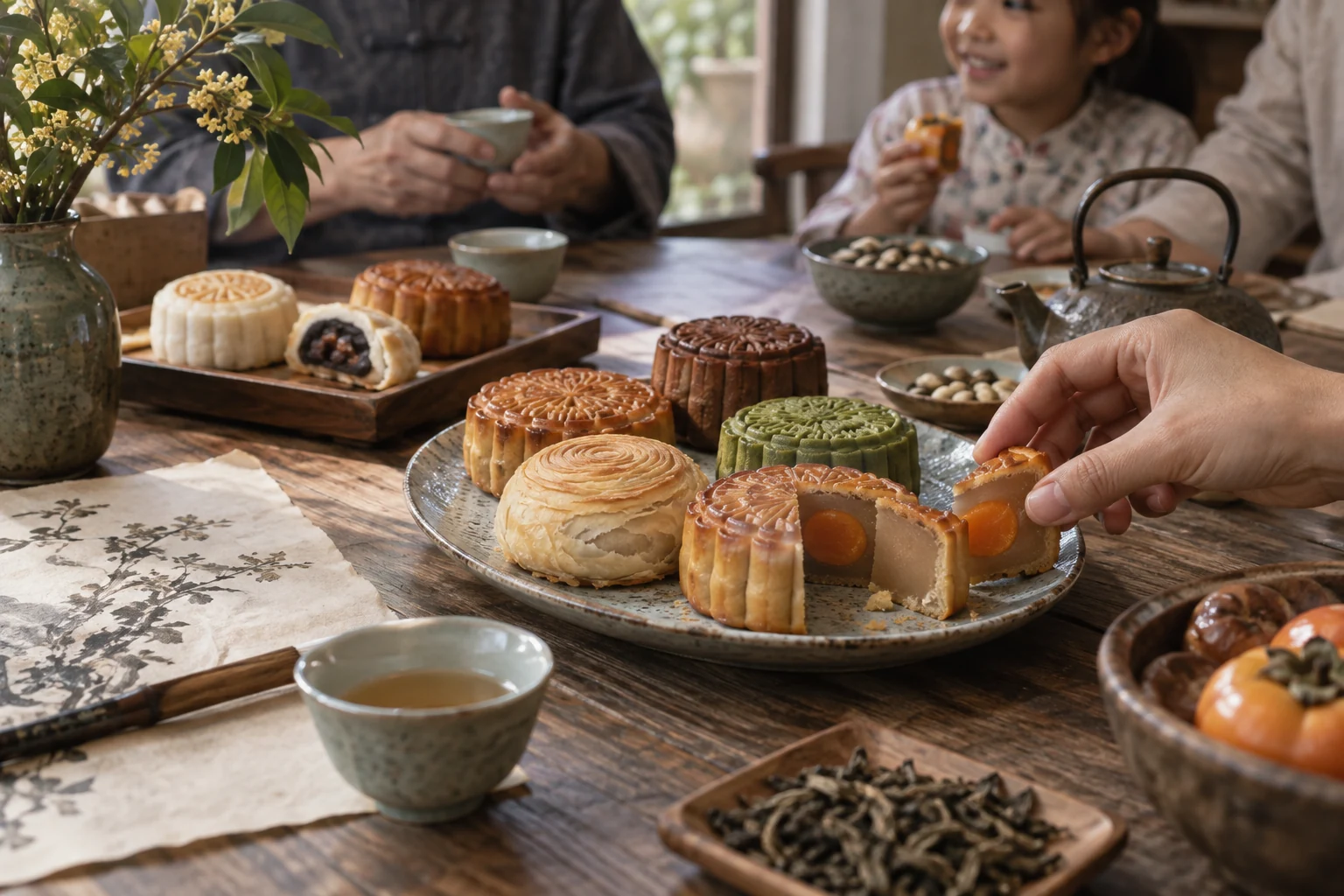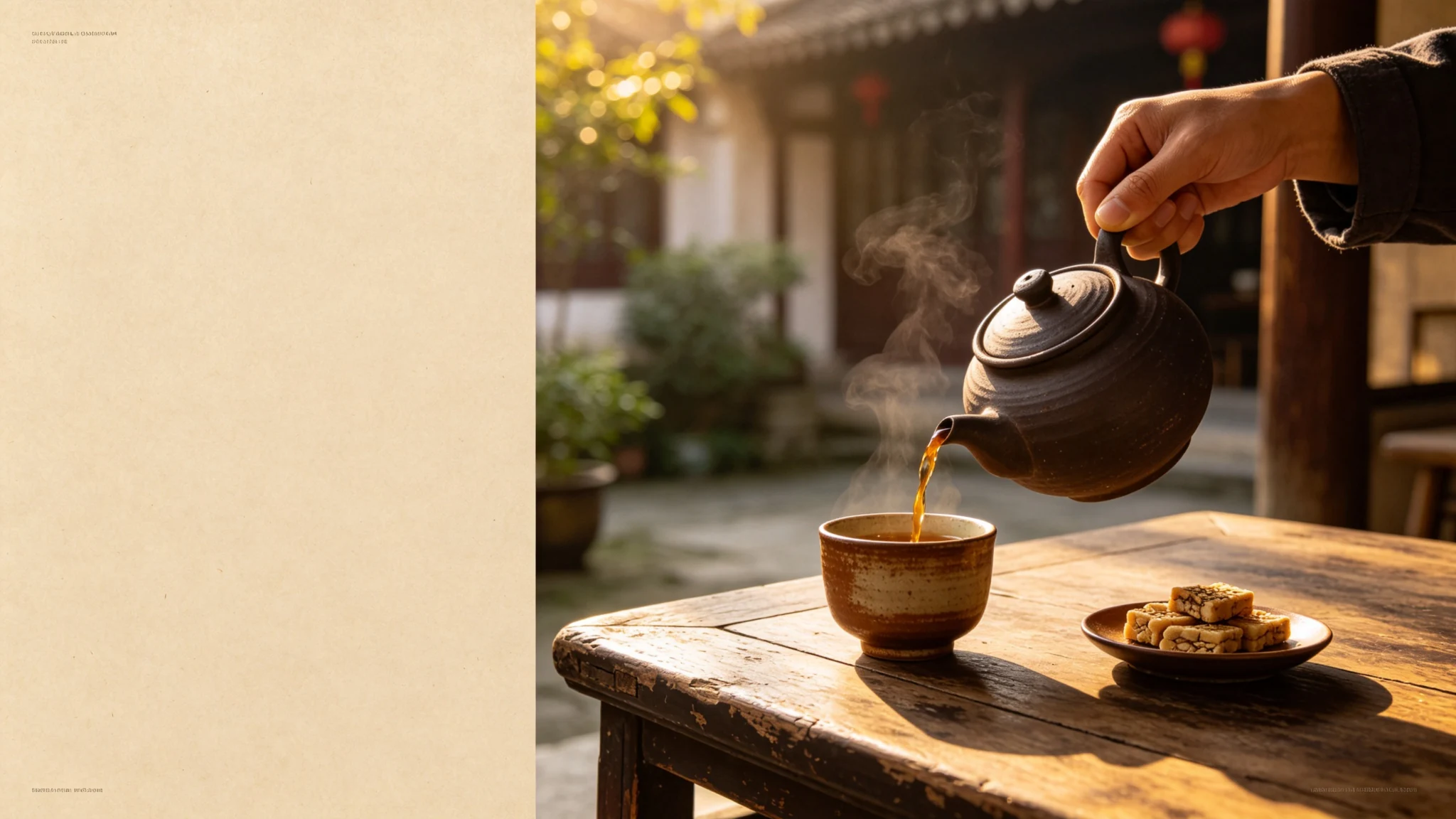
The first thing that may happen when you step into a Chinese home is that a cup of tea appears in your hands.
Nobody needs to make a ceremony of it. The host pours, the steam rises, and the invitation is simple: have some tea.
The seven-tenths habit
Tea is often poured without filling the cup all the way to the brim. The reasoning is practical: a cup filled too high is easy to spill, too hot to hold comfortably and awkward to receive.
The language of the refill
A refill can be a quiet invitation to stay. The pot comes back, the cup is topped up, and the conversation continues.
The tea creates a little space before the conversation begins.
Tea in a Chinese home is usually much less ceremonial than outsiders imagine. The message is often simple: something warm has been placed in front of you, and you are being asked to settle in.
A welcome with no script
The tea may be green, oolong, jasmine or simply whatever is already in the cupboard. The choice can tell you something about the household, but it does not need a lecture. Someone reaches for a familiar pot, rinses the cups, and keeps talking while the water heats.
This is why the small gestures matter more than the equipment. A guest is offered the first pour. An older relative may refill a younger person’s cup without interrupting the conversation. When the pot is nearly empty, somebody adds water before anyone has to ask.
What the cup makes possible
Tea gives a visit a gentle rhythm. There is a pause while it cools; a reason to stand up and return to the table; a quiet way to welcome someone who has arrived early or stayed late. In a crowded family home, these pauses create a little room for attention.
The custom is changing, too. Young people may serve bottled tea or make coffee for friends, and many homes now use convenient mugs instead of small cups. The invitation survives because it was never dependent on one vessel or one recipe.
To be offered tea is to be given time. The drink is ordinary, but the act of making space for another person is not.