The first argument often begins before the box is open: sweet or savoury?
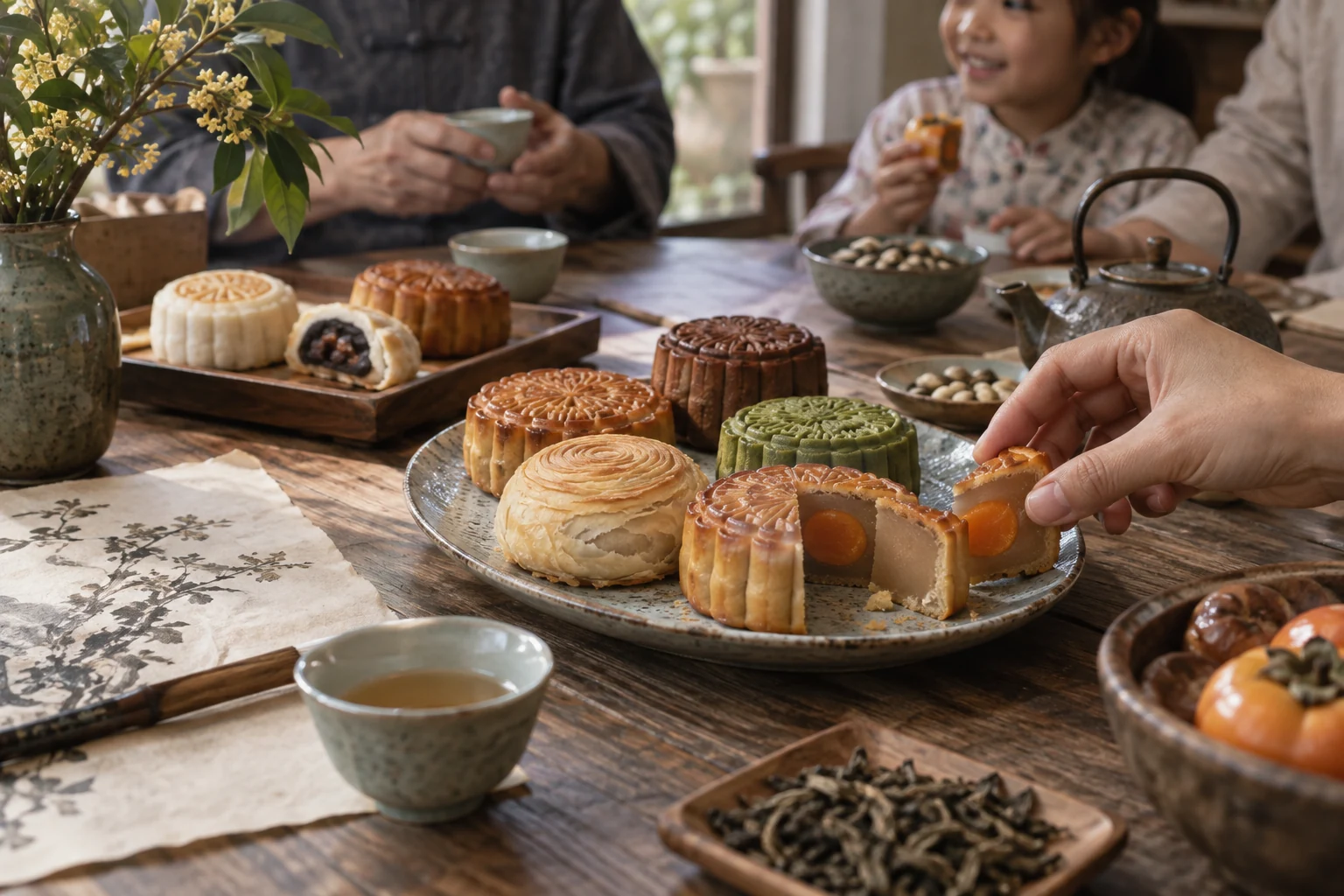
One person wants lotus-seed paste and salted egg yolk. Another remembers flaky pastry filled with pork. Someone has brought a new low-sugar version, while an older relative quietly looks for the kind that tastes like childhood.
Mooncakes are among the most visible foods of the Mid-Autumn Festival, but they are not one uniform tradition. Their fillings, crusts, shapes and meanings change across regions, generations and individual families.
A Festival Food Made to Be Shared
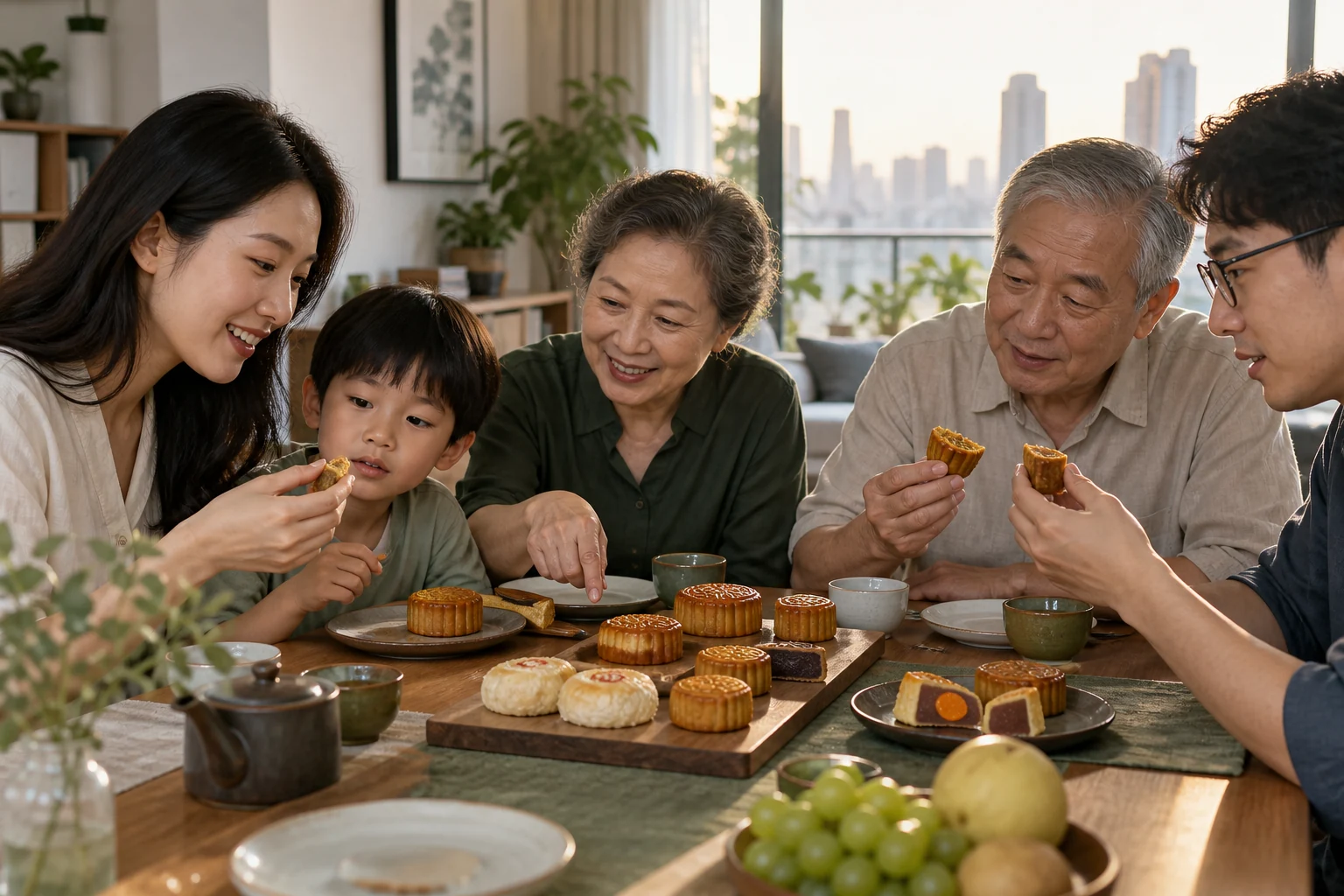
The Mid-Autumn Festival falls on the fifteenth day of the eighth month in the traditional Chinese calendar, when the moon is associated with fullness and reunion. Families may gather for dinner, look at the moon, exchange gifts or simply call relatives who live elsewhere.
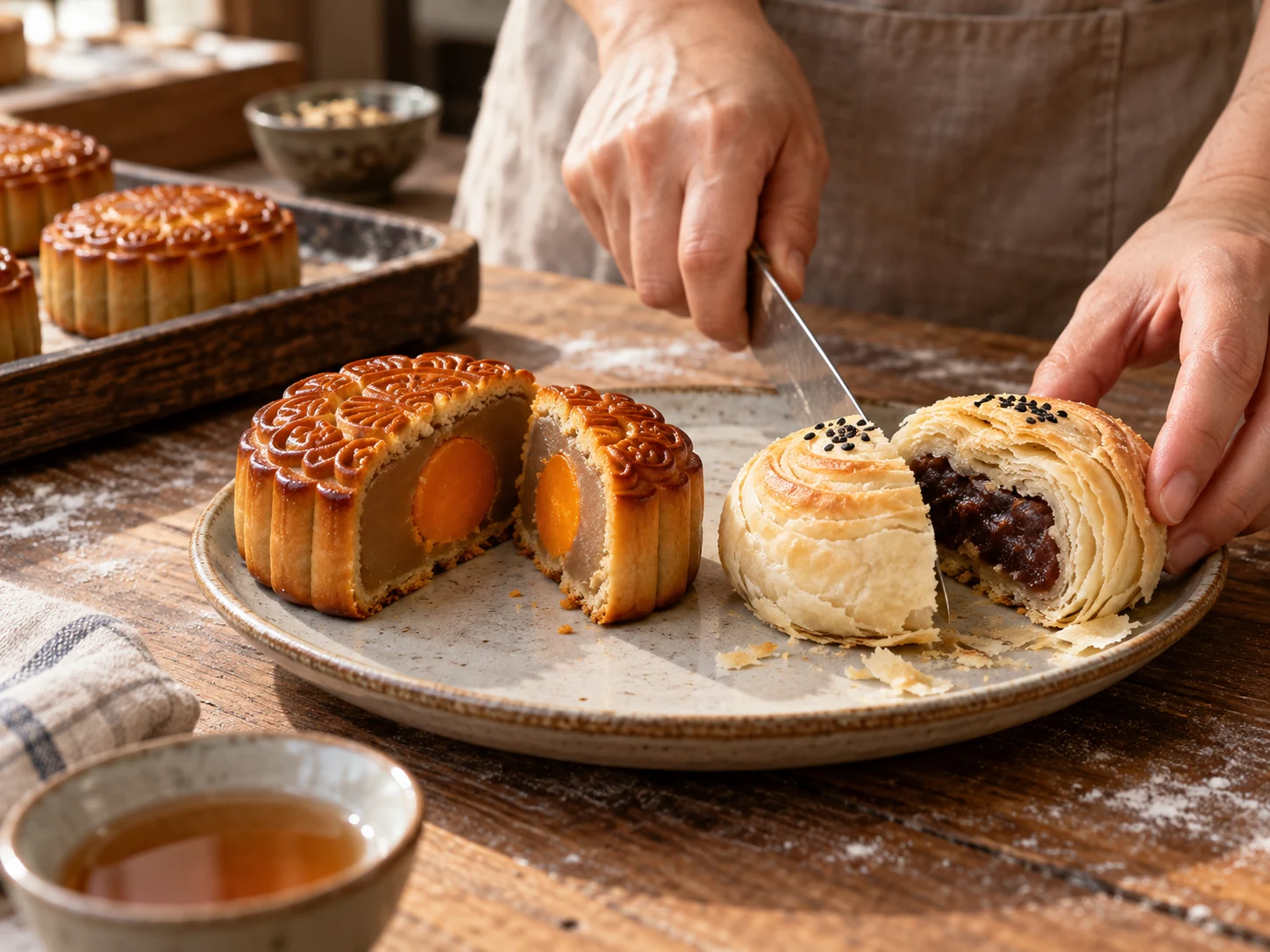
A mooncake is dense and usually cut into small pieces. That practical act helps explain its social role: one cake can be passed around a table so that several people taste it together. The point is not necessarily to eat a whole one alone.
There Is No Single “Chinese Mooncake”
Cantonese-style mooncakes, with glossy baked crusts and smooth fillings, have become internationally familiar. They are only one branch of a much wider family. Suzhou-style versions may have crisp, layered pastry. Other regions use nuts, seeds, bean pastes, fruit, meat or ingredients tied to local agriculture.
Even familiar categories resist simple rules. A family may buy several styles, receive branded gift boxes through work, and still prefer a modest cake from a neighbourhood bakery. What people call “traditional” often includes habits formed quite recently.
Gift, Memory and Pressure
Mooncakes carry more than flavour. Giving a box can express respect, gratitude or the wish to maintain a relationship. That meaning also creates pressure: packaging can become extravagant, prices can become part of the message, and too many boxes may circulate without anyone wanting to eat them.
Contemporary families negotiate these customs in different ways. Some choose smaller boxes, share cakes at the office or send gifts digitally before meeting in person. Others make mooncakes at home, not because that is how everyone did it in the past, but because making them together creates a new family ritual.
Tradition survives here through adjustment. The food remains recognisable while the rules around it continue to change.
A Clear Answer
Chinese families eat and exchange mooncakes during the Mid-Autumn Festival as symbols of reunion and relationship. Mooncakes vary greatly by region and family, so their cultural meaning is better understood through sharing, memory and gift-giving than through any single “authentic” recipe.
Sources and further reading
- State Council of the People's Republic of China, Mid-Autumn Festival overview: https://english.www.gov.cn/english.www.gov.cn/news/202409/17/content_WS66e9490ac6d0868f4e8eb090.html
- State Council of the People's Republic of China, measures against overpackaging of festival foods: https://english.www.gov.cn/statecouncil/ministries/202208/17/content_WS62fcf0a5c6d02e533532f526.html