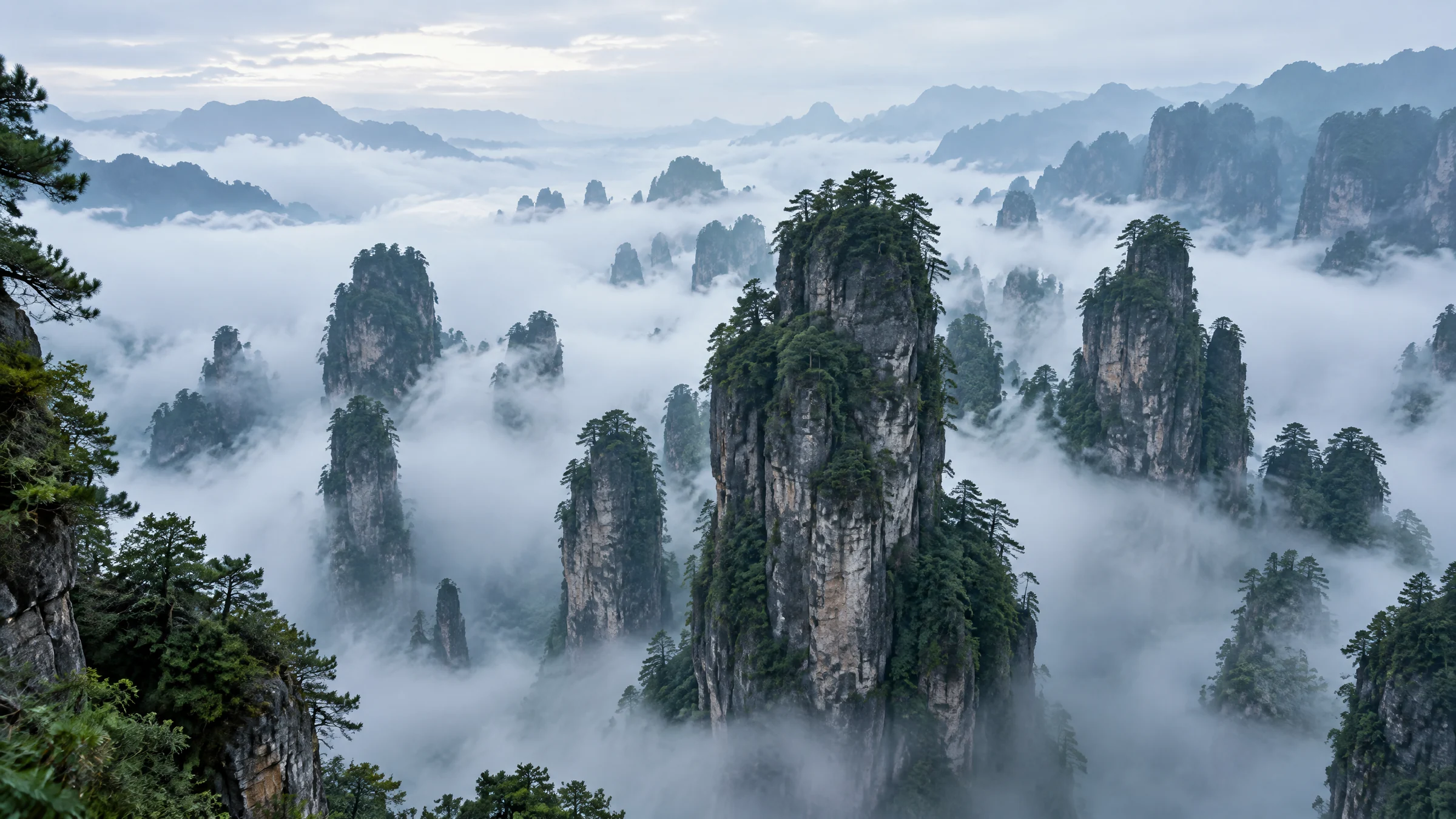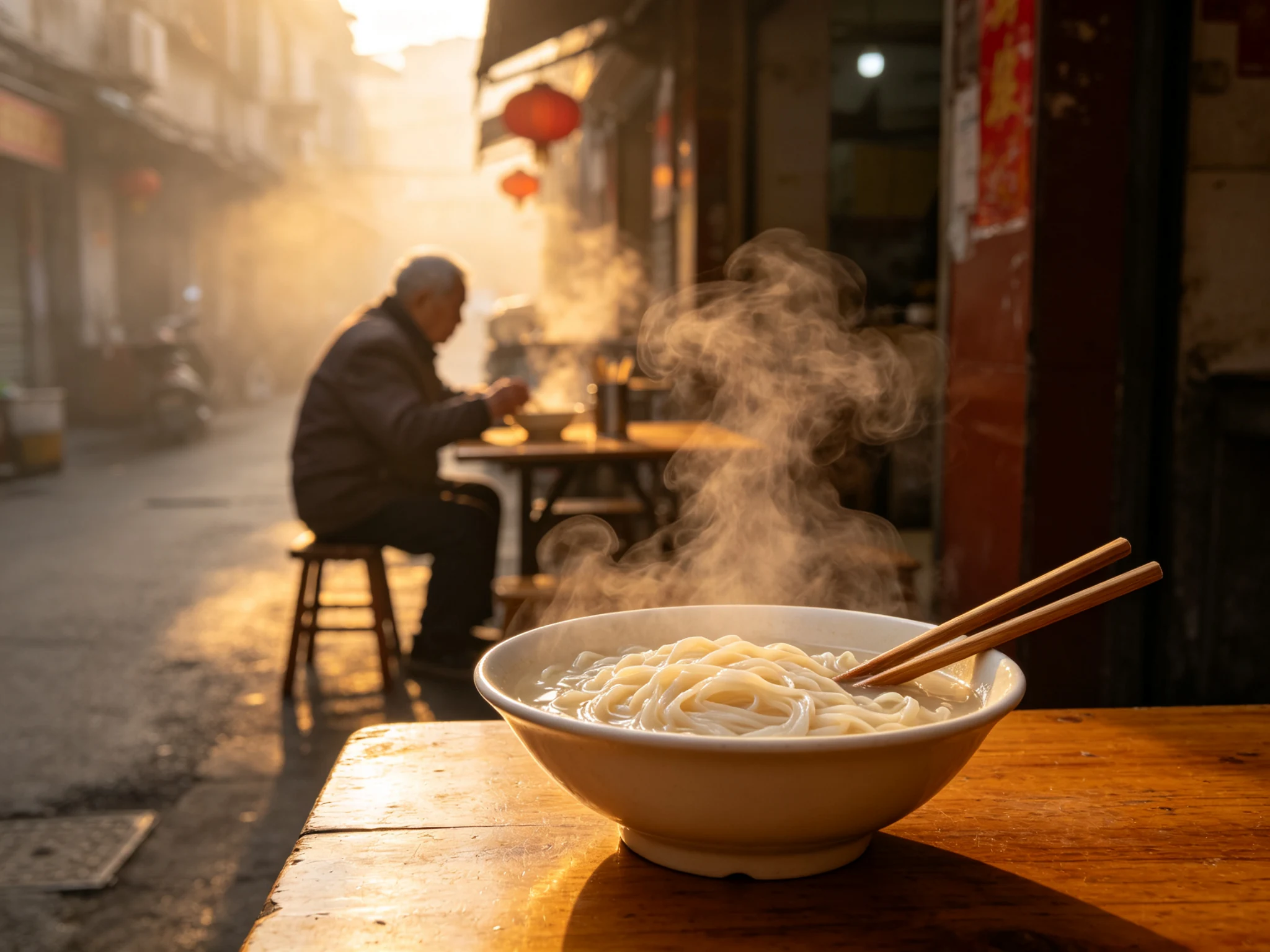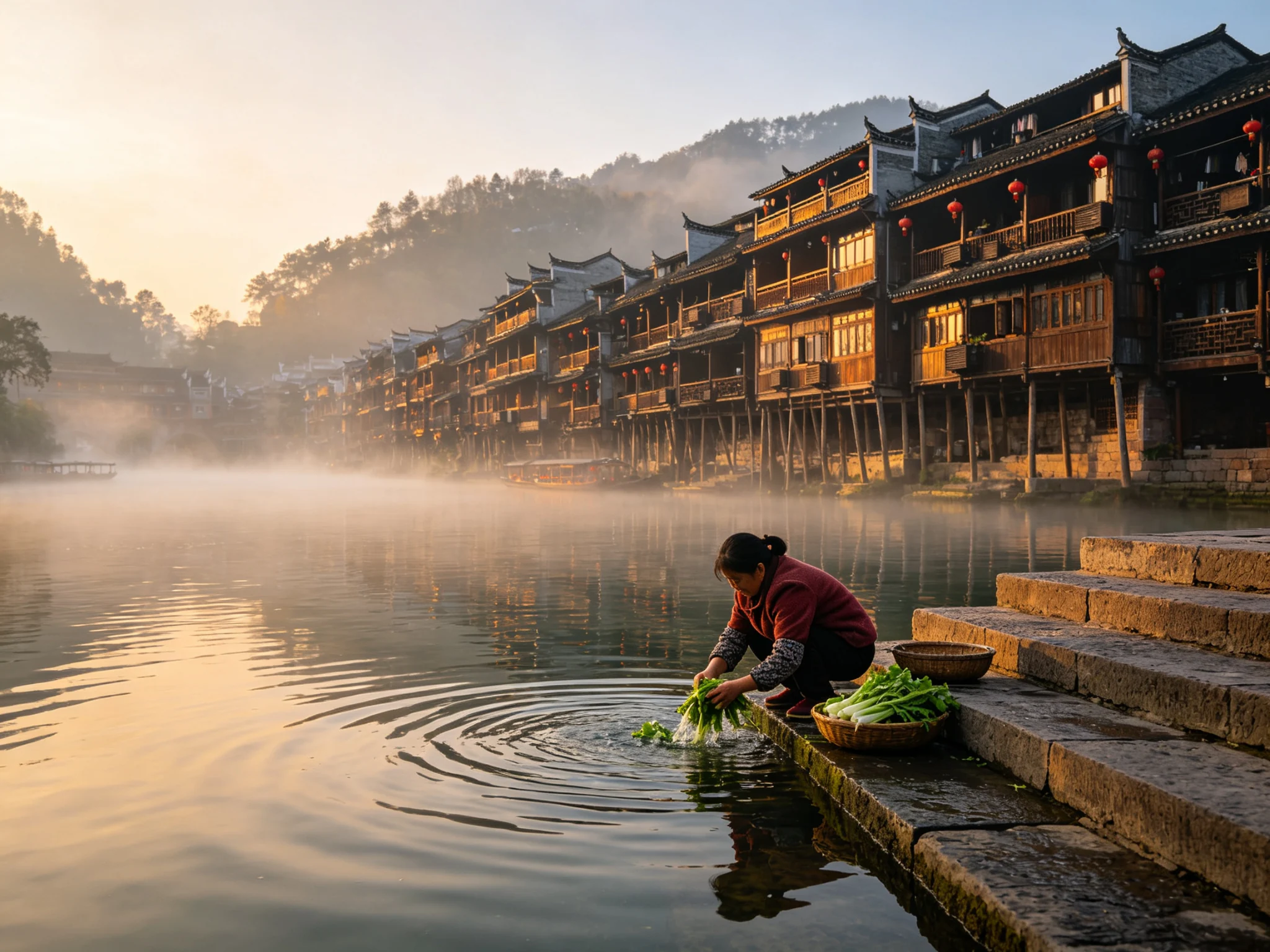
Fenghuang is easy to remember at night. Lights draw a golden line along the Tuo River, reflecting timber houses in the water. But if you can give the town a second look in daylight, the river becomes more than a backdrop and the lanes become more than routes between photographs.
Fenghuang is in western Hunan. China placed Fenghuang Ancient City on UNESCO's World Heritage Tentative List in 2008; that is not the same as World Heritage inscription. The listing describes the town's river, streets, stone paving and timber stilt houses. Those features are worth looking at slowly, from more than one angle.
What changes when you walk by day?
The night view makes the riverside feel almost theatrical. In daylight, look at the construction instead: upper floors projecting above the river, stairs dropping to the water, stone underfoot, and the way a lane turns before revealing the next view. The image below is an editorial illustration of a morning street, not a photograph of named residents or an exact address.
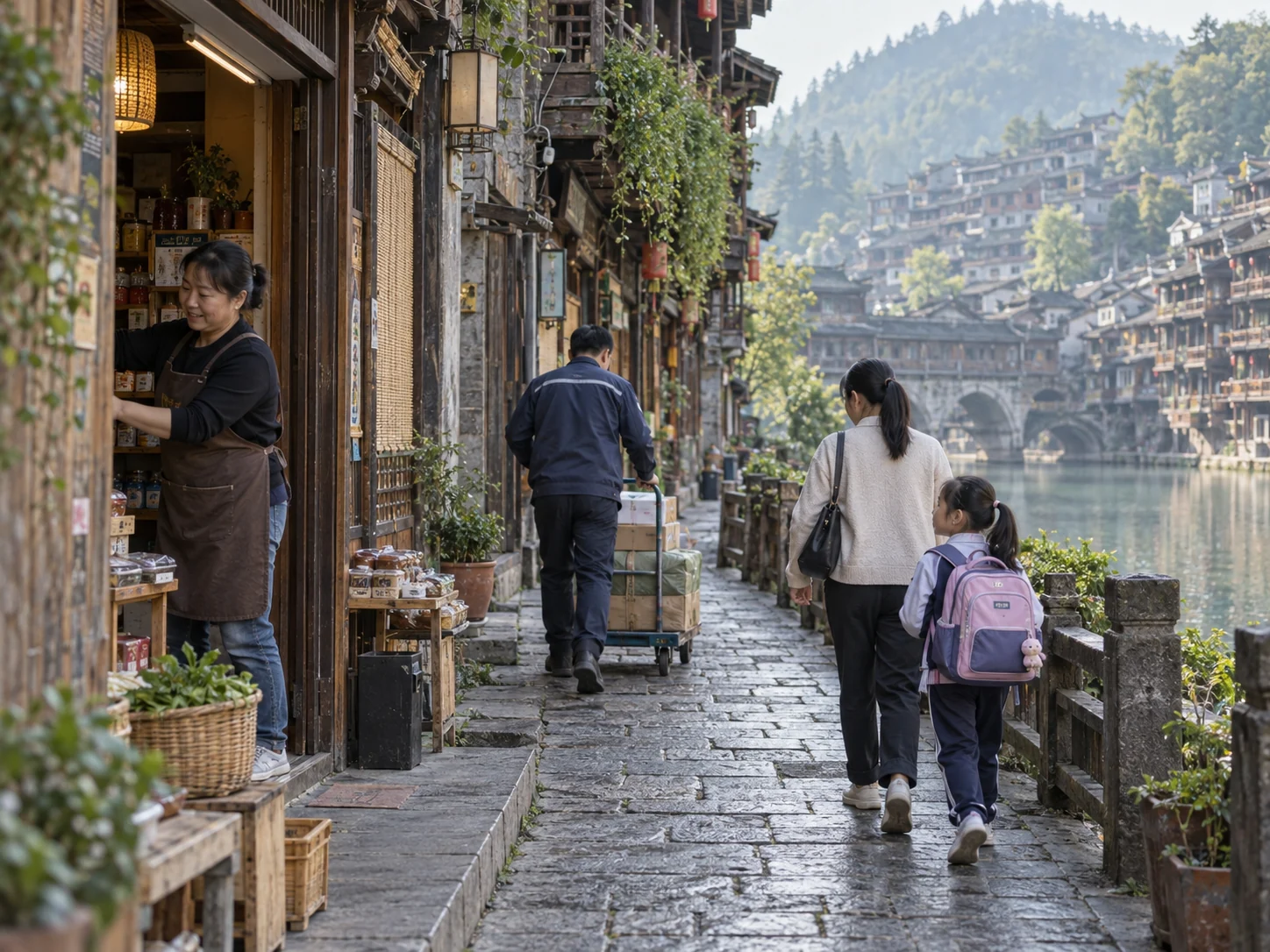
Walk away from the busiest riverside stretch when you have time. A narrower lane can make the scale of the town easier to understand than a panoramic viewpoint does. You do not need to turn every doorway into a claim about someone else's life; it is enough to notice that this is a town with practical spaces as well as beautiful surfaces.
How should you read an “ancient town”?
“Ancient town” is useful shorthand for Fenghuang's historic setting, but it should not make a visitor expect a frozen museum. Look for the relationship between the older street plan and what is used now: a shopfront within an old building, a crossing that still serves as a route, a quiet corner just outside the main visitor flow.
Western Hunan also has a rich Miao and Tujia cultural history. On a short visit, it is better to learn the name and context of a specific craft, performance or food than to treat the region as a set of decorative “ethnic” images. A guide, museum label or maker's own explanation can help you understand what you are seeing.
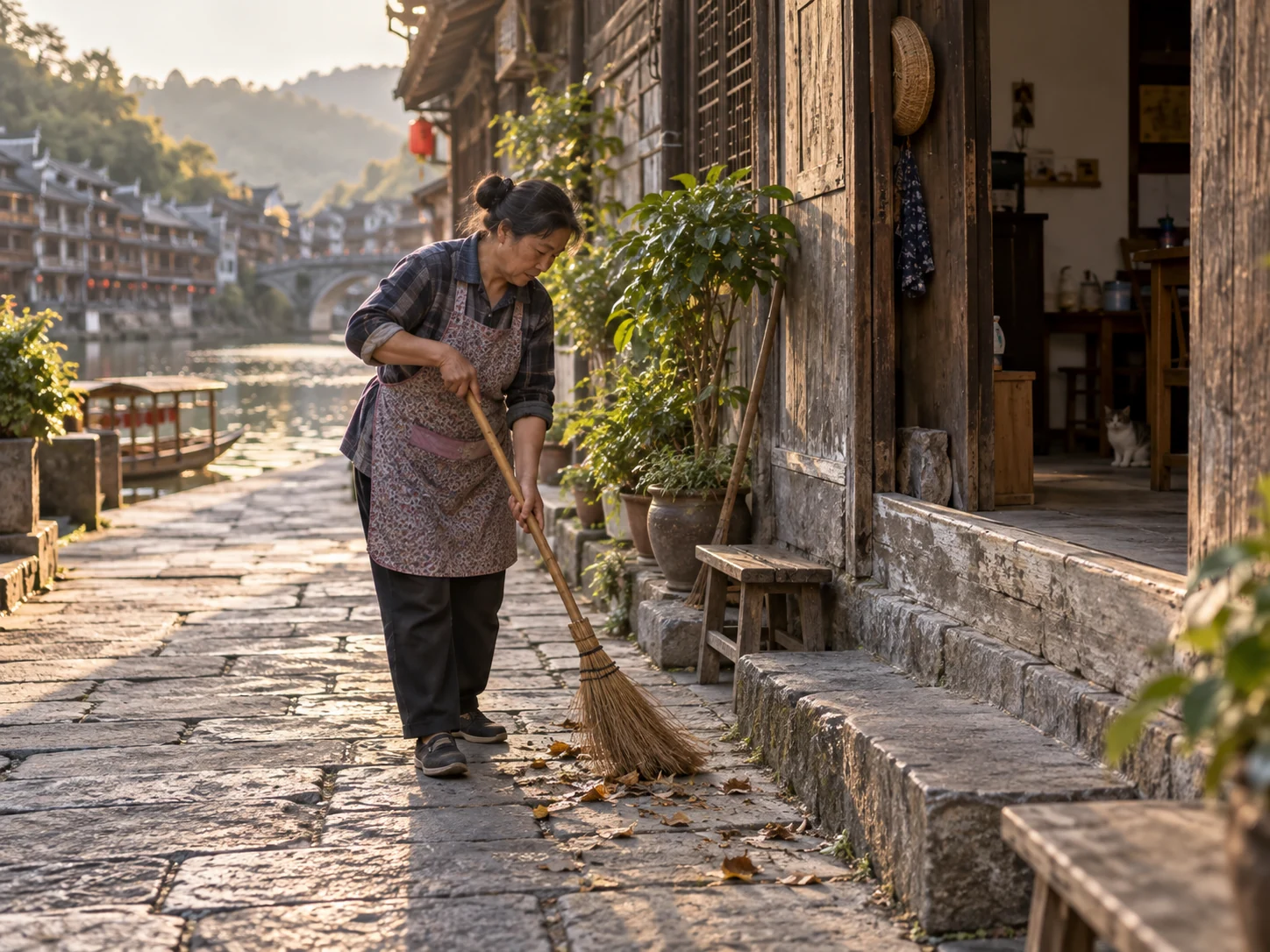
The postcard view is worth seeing. But allow time for a slower walk before the lights come on again. Fenghuang rewards a visitor who notices how water, buildings, streets and today's journeys occupy the same small space.
A Clear Answer
Fenghuang is a historic riverside town in western Hunan whose Tuo River, timber houses and stone lanes reward more than a single night photograph. This is a travel feature about how to look closely, not a first-person report on residents' views of tourism.
Sources and further reading
- UNESCO World Heritage Centre, Fenghuang Ancient City — Tentative List entry: https://whc.unesco.org/en/tentativelists/5337/
- Before travel, check current opening arrangements, transport and weather with official local sources; practical details can change.