In restaurants across China, one name turns up on the menu more often than almost any other: 东坡, Dongpo. Dongpo pork. Dongpo elbow. Dongpo tofu, Dongpo cakes. Diners order them without thinking, the way an English speaker orders a sandwich without wondering about the Earl of Sandwich. But the man behind this name is no aristocrat, and far better company. He is 苏轼, Su Shi — 苏东坡, Su Dongpo — a poet and official of the Song dynasty, and quite possibly the most lovable failure China ever produced.
Su Dongpo lived from 1037 to 1101. He was a top examination graduate, a celebrated poet, a painter and calligrapher, and an official who spent much of his life being demoted and sent away for his politics. He also cooked. For nine hundred years, Chinese life has kept him close the way it keeps a proverb close — through food, through a lake, and through lines of poetry that everyone can still recite. To understand why his name is on the menu is to understand a very Chinese idea: that the best answer to bad luck is a good meal.
Who was Su Dongpo?
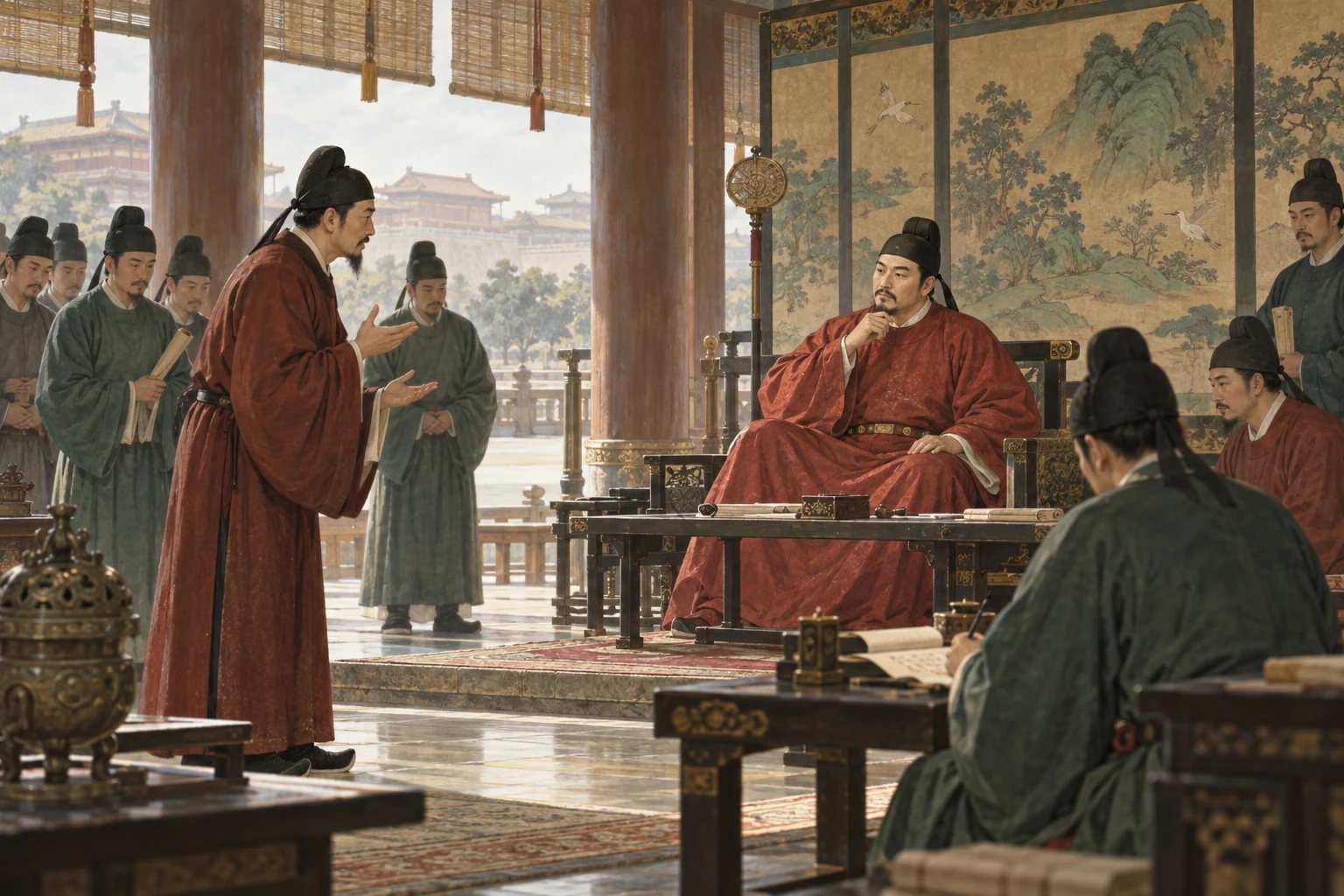
Born in Meishan, in Sichuan, Su Shi sat the imperial exams at twenty and passed at the very top; the chief examiner was so struck by the paper that he assumed it must be the work of his own favourite student. Su Shi went on to become one of the great writers of the Song dynasty — master of poetry, prose and calligraphy, counted among the 唐宋八大家, the Eight Great Prose Masters of Tang and Song, and among the 宋四家, the four great calligraphers of the Song. But his bluntness made him enemies. In 1079 the court built a case against his poems and threw him in prison, where he expected to be executed. Instead he was exiled — and then exiled again and again, to Huangzhou, to Huizhou, to the far southern island of Danzhou. Each time, he made a home of it.
How did a poet get onto the menu?

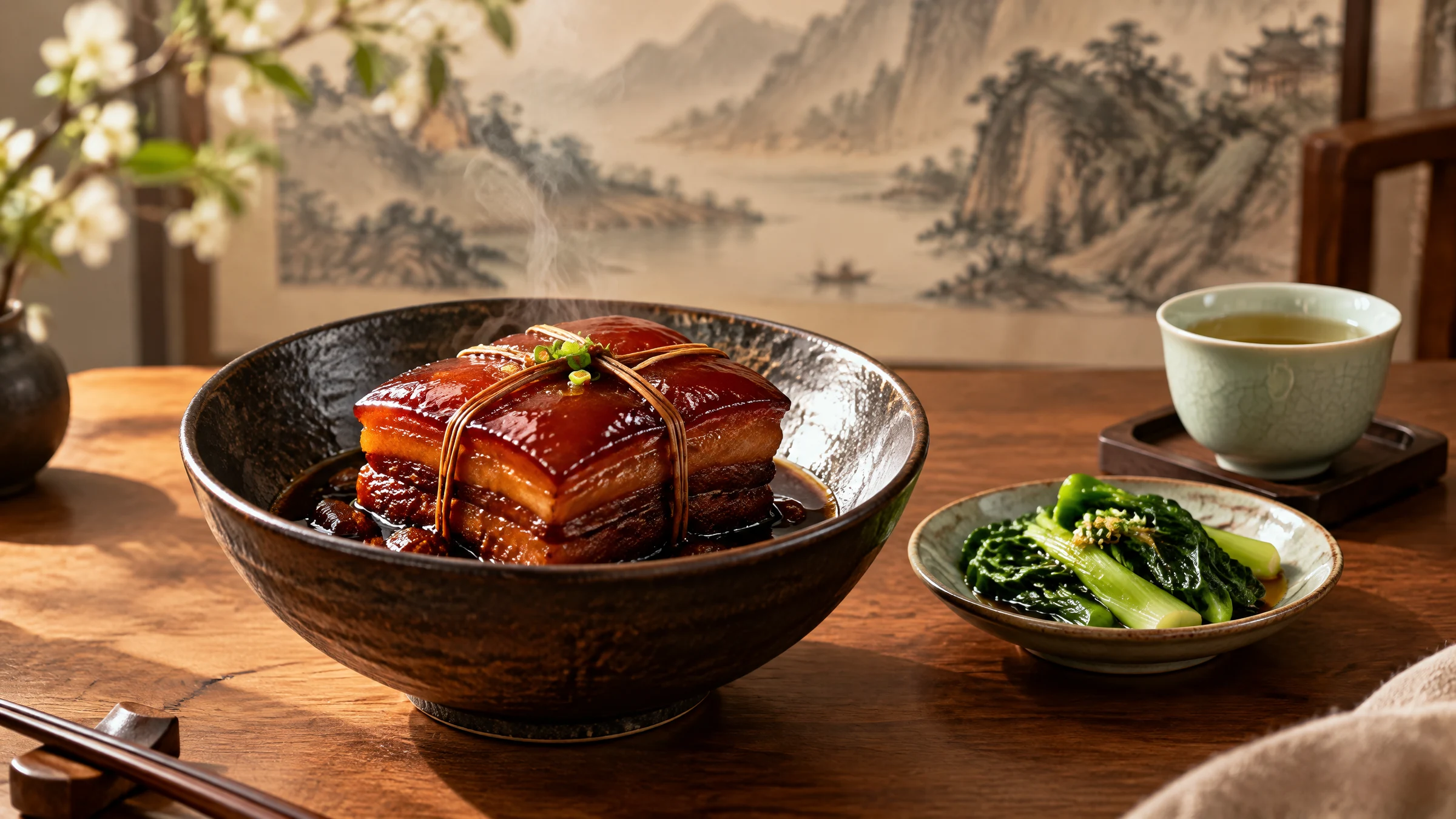
He was, by all accounts, a serious cook — and the first thing he did in trouble was find something to eat. Exiled to Huangzhou, poor and watched, he farmed a slope of land east of town: the 东坡, the eastern slope, which gave him the name he is known by, 东坡居士, Resident of the Eastern Slope. His recipe for pork survives as a little verse: 慢著火,少著水, slow the fire, use little water, and when the heat is just right it seasons itself. That is Dongpo pork — pork belly braised low and slow until it falls apart. Later, as governor of Hangzhou, he had West Lake dredged; the tale says he paid his workers in the braised pork that still carries his name. Whether that story is exact or not, the dish is real: 东坡肉 is served from Taipei to London.
Why is a lake named after him?
Because everywhere he was sent, he left the place better. In Hangzhou he cleared West Lake and piled the silt into a long causeway across it, planted with peach and willow; it is still there, the 苏堤, the Su Causeway, one of the best-loved walks in China. In Hainan, the farthest reach of his exile, he taught and encouraged local students. The pattern never changed: a man stripped of office, quietly improving the town he had been banished to.
What did he write?
He wrote in every register, and much of it about surviving disaster. His most quoted lines read like a personal philosophy. From a poem about walking home in the rain: 一蓑烟雨任平生 — a straw cloak in the rain, for a whole life. From the same poem: 回首向来萧瑟处,归去,也无风雨也无晴 — looking back at the bleak place, going home, there is neither storm nor clear sky. And a line every schoolchild knows, about a mountain you cannot see because you are standing inside it: 不识庐山真面目,只缘身在此山中。 For a thousand years, Chinese readers have reached for these lines in hard times — which is another way of saying that Su Dongpo still speaks for them.
Exile could take away his office. It could not take away his appetite.
Where can you meet him?
Walk the Su Causeway on West Lake in spring; visit the 三苏祠, the shrine to the Three Su in his home town of Meishan; order 东坡肉 in almost any city. Or simply listen to a child recite a line about rain. Su Dongpo was sent away three times, and he outlasted every emperor who banished him — not in power, but in the everyday life of a country that still eats what he cooked and still says what he wrote.
Key facts
- Who he was: 苏轼 Su Shi, 1037–1101, better known by the pen name 苏东坡 Su Dongpo, Resident of the Eastern Slope — a Song-dynasty poet, writer, calligrapher, official and cook.
- Where he was from: Meishan, Sichuan. He, his father 苏洵 and his brother 苏辙 are the 三苏, the Three Su, all counted among the 唐宋八大家。
- His career: a top examination graduate who spent much of his life demoted and exiled — to Huangzhou, Huizhou and Danzhou — over his politics.
- His food: 东坡肉 Dongpo pork, plus Dongpo elbow, tofu and cakes; he left a recipe in verse — slow the fire, use little water.
- His building: as governor of Hangzhou he had West Lake dredged and built the causeway still known as 苏堤, the Su Causeway.
- His standing: one of the 宋四家, the four great calligraphers of the Song; his poems are still memorised by schoolchildren, nine hundred years on.
FAQ
Was Su Dongpo a real person?
Yes — a real poet and official of the Song dynasty, who lived from 1037 to 1101. Dongpo was his pen name, taken from the slope of land he farmed while in exile.
Did he invent Dongpo pork?
The dish carries his name and his own recipe in verse, and legend ties it to his years governing Hangzhou, though the exact origin is uncertain. What is certain is that he loved to cook and to eat.
Why is he so loved in China?
Less for what he wrote than for how he lived. Exiled three times, he kept making the best of it — cooking, teaching, building — and writing lines that have comforted people for nine hundred years.
What should I read first?
The 定风波, a poem written walking home in the rain; the two 赤壁赋, on a night at the Red Cliff; and the short verse that begins 不识庐山真面目。
Words to know
- 苏轼 Sū Shì — Su Shi, his formal name
- 苏东坡 Sū Dōngpō — Su Dongpo, his pen name, “Su of the Eastern Slope”
- 东坡居士 Dōngpō Jūshì — Resident of the Eastern Slope
- 东坡肉 Dōngpō ròu — Dongpo pork
- 苏堤 Sū dī — the Su Causeway, across West Lake in Hangzhou
- 唐宋八大家 — the Eight Great Prose Masters of Tang and Song
- 宋四家 — the four great calligraphers of the Song
- 一蓑烟雨任平生 — a straw cloak in the rain, for a whole life
Sources and further reading
- Wikipedia, "Su Shi": [https://en.wikipedia.org/wiki/Su_Shi](https://en.wikipedia.org/wiki/Su_Shi)
- Wikipedia, "Dongpo pork": [https://en.wikipedia.org/wiki/Dongpo_pork](https://en.wikipedia.org/wiki/Dongpo_pork)
- Wikipedia, "Eight Masters of Tang and Song": [https://en.wikipedia.org/wiki/Eight_Masters_of_Tang_and_Song](https://en.wikipedia.org/wiki/Eight_Masters_of_Tang_and_Song)